Samarkand - The caravan moves on - Uzbekistan 2026 - 5
Samarkand
It’s already 25°C at 8 a.m. Tomorrow, it’s supposed to get as hot as 41°C here. Good thing we’re heading to Samarkand. There, the temperature is expected to stay around 31 or 32 degrees, just like the last few days.
According to the itinerary, the drive is supposed to take 4.5 hours. Even with brisk driving, it’ll probably end up being closer to 6 hours. The ride is pretty boring. Even though we’re no longer driving through the steppe, there isn’t much to see. Our minibus offers plenty of space for our small group, but every now and then I find myself wishing we had a real bus. But you can’t have everything.
At noon, we stop at a gas station with an attached store that sells coffee, other drinks, and snacks. I skip it - I had enough for breakfast and haven’t done anything but sit around since then.
Since we won’t arrive in Samarkand until around 2:30 p.m., we don’t go to the hotel but start our sightseeing tour right away. It’s supposed to last about 4 hours.
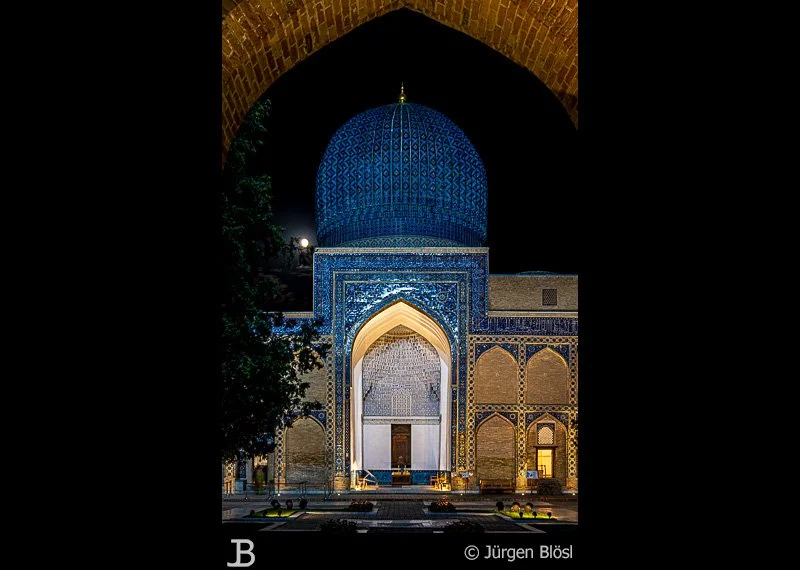
We start with the Gur-Emir Mausoleum [↗], the final resting place of the ruler who is now once again revered here. Much like with the Mongols and Genghis Khan [↗], as a foreigner, you don’t necessarily have to understand this choice.
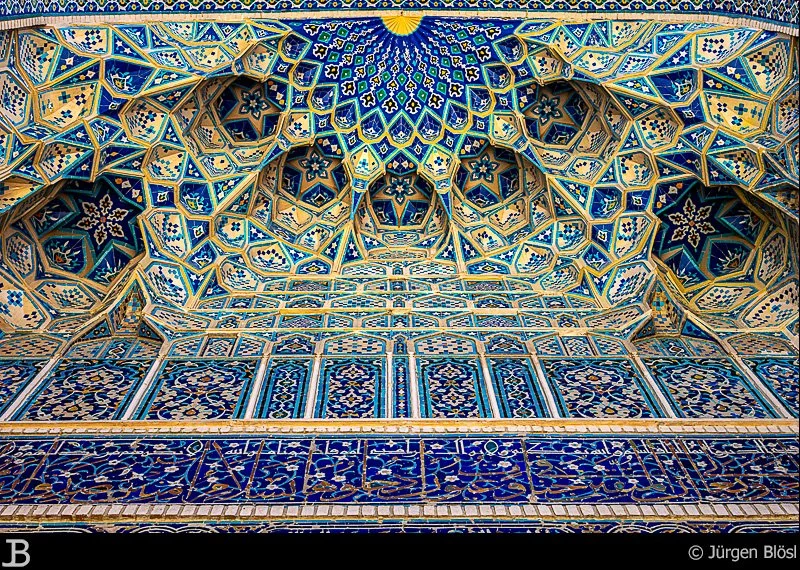
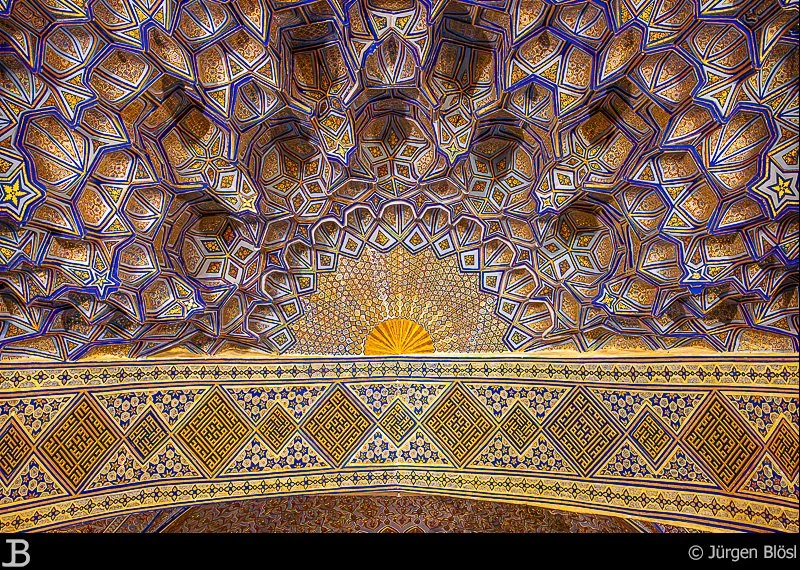
We continue on foot to what is probably the most famous square in all of Uzbekistan, the Registan [↗]. In Farsi, “Registan” means “sandy square,” which originally referred to a marketplace. Even today, Farsi remains the lingua franca in Samarkand and Bukhara - a testament to the importance of these two cities as trading centers in the Middle Ages.
Surrounding the square today are large, former madrasas. As impressive as the square itself is, there’s little of interest inside. The bare rooms contain a few display cases with exhibits; only a few rooms are beautifully decorated. Almost all of the former study rooms now serve as shops selling the same stuff over and over again. Still, it’s easy to spend an hour here Of course, if you’re actually looking for souvenirs here, it will take even longer.
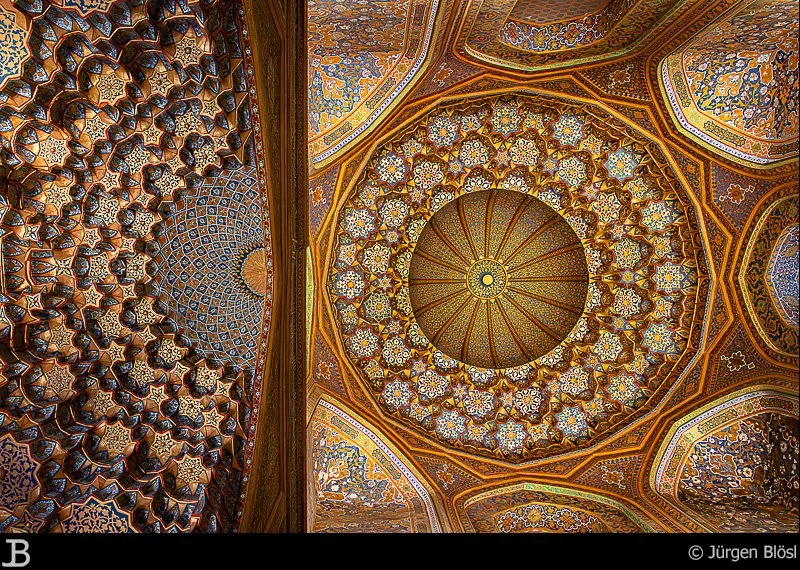
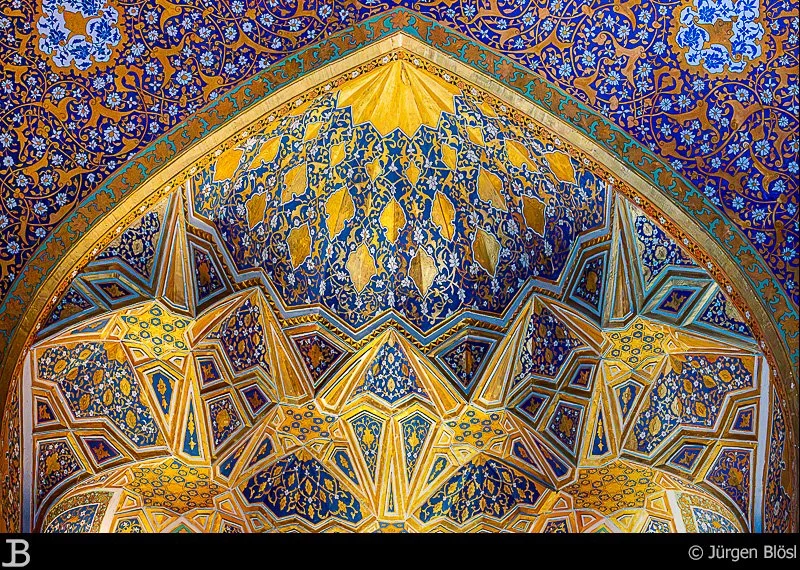
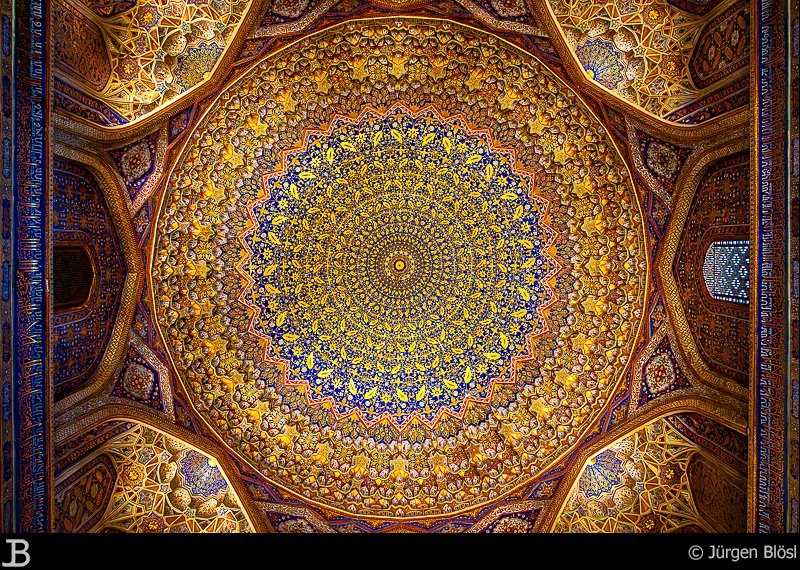
Next up is the Bibi Mosque [↗]. Slowly but surely, one mosque starts to look just like the next. The Bibi Mosque is one of the less beautifully restored ones. I don’t even take my camera out of my backpack.
However, there are quite a few stories and myths associated with Timur’s wife. The various guides tell the story with slight variations, but essentially it’s about the mosque’s architect and his attempt to seduce her. The ruler was, of course, less than thrilled about this, and so the mosque remained unfinished.
Finally, we head to the large, neighboring Siyob Bazaar [↗]. Aside from the small corner with vegetables, I don’t think locals shop here. There’s the usual mix of spices, tea, ceramics, and clothing. Everything is neatly organized, and the sections are labeled in English.
It’s now 6:30 p.m., and you can tell the group has long since lost its motivation. Everyone is glad we're heading to the hotel and then out to dinner.
Here, too, I leave the hotel shortly after 6 a.m. the next morning to take photos undisturbed by the crowds. My destination is Registan Square, where we were already yesterday afternoon. The direct route is said to be 2.2 km long. The Gur-Emir Mausoleum is also almost on the way, so I can stop by there again on the way back.
Shortly after leaving the hotel, I pass the Silk Road University [↗]. There are some nice statues in the small park. I walk along the university avenue for a bit. Here are impressive buildings from the Tsarist era, as well as a Chinese garden. The Gur-Emir Mausoleum is now on my right, and soon I’m back on the road we took yesterday.
Registan Square is mostly empty at this time. It isn’t officially open yet, but a few wedding photographers and others are already inside. I also could have gone in for an appropriate “donation,” but I decide against it.
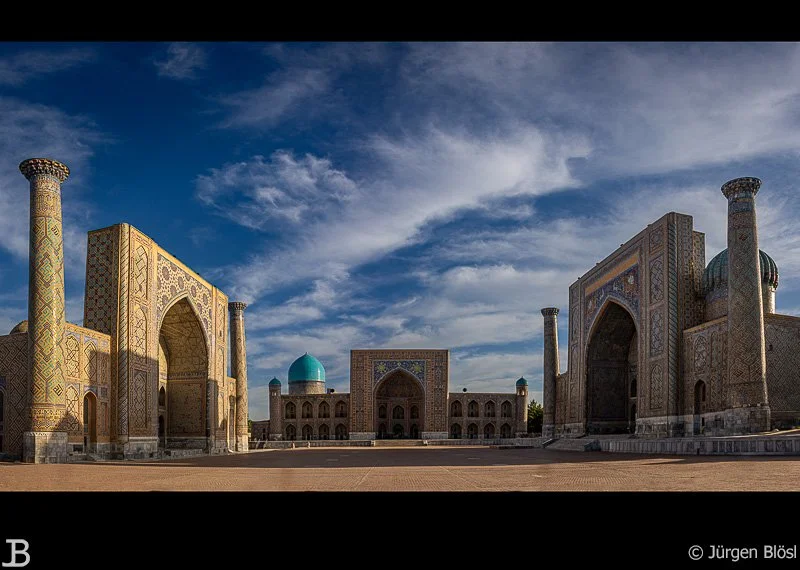
As planned, I take a short detour to the mausoleum, but it’s not really worth it. It’s now just past seven, and the first large tour group is already waiting at the entrance.
After exactly 1.5 hours, I’m back at the hotel. Then it’s the usual routine: a shower, a rather lackluster breakfast, and at 9 a.m. we board the bus to visit the destinations located a bit outside the city center.
The first stop is the Shah-i-Zinda necropolis [↗]. The “City of the Dead” dates back to the time of Timur, although the area’s use as a cemetery is much older. Here, a series of mausoleums line a path. Many of them are beautifully decorated and well-restored. For me - and probably many others as well - this is the highlight of Samarkand.
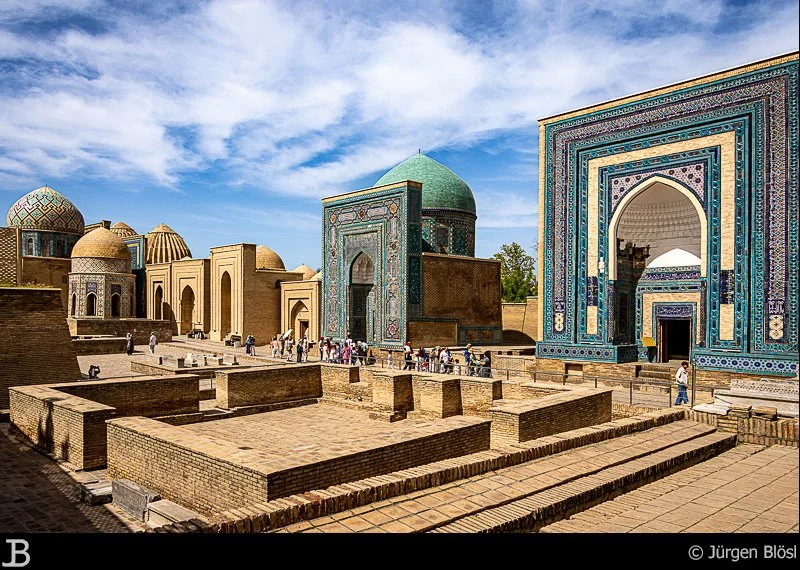
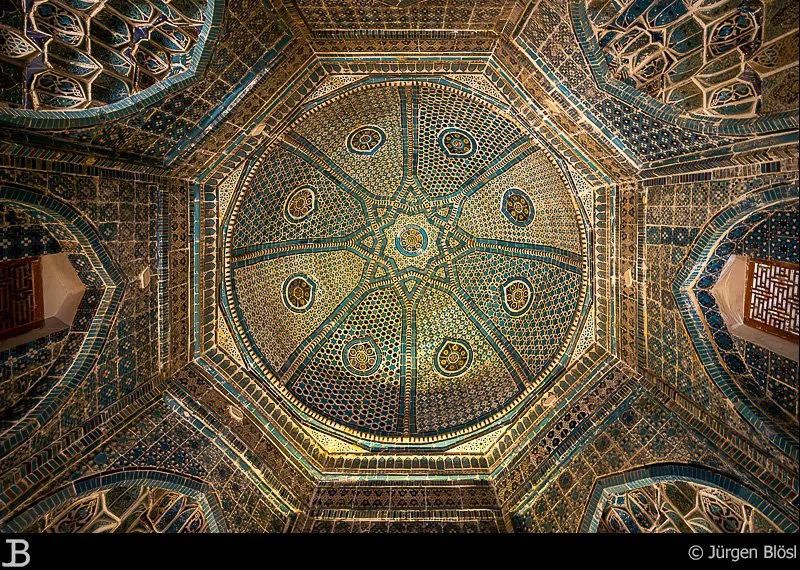
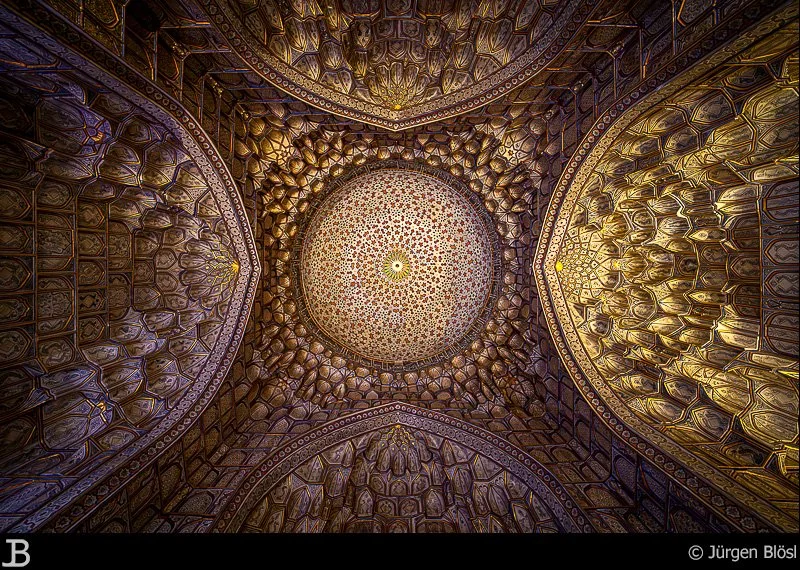
At a nearby modern cemetery, we are told about the Islamic funeral ceremony. Quick stop at former President Karimov’s [↗] mausoleum, and then we continue by bus to the Afrosiab Museum [↗], just a few hundred meters away.
The museum displays the excavations from the nearby ancient city of Samarkand, dating from around 800 B.C. through the conquest by Alexander the Great [↗] to the early Middle Ages. Most of the artifacts date from 500–800 A.D.
An inconspicuous staircase leads to the upper floor. There, however, the exhibition still looks very makeshift. The excavation site itself is wasteland. If you’re not coming for the museum, you can skip this stop.
By now it’s almost 1:00 p.m., and we’re struggling a bit. It’s 32°C with a light breeze. It’s actually quite pleasant, but still.
The penultimate stop is Daniel’s tomb [↗]. We climb the stairs, sit down in the shade, and let ourselves be entertained by the story of the prophet. What lies here, however, is not the body, but supposedly a bag of sand from the actual grave. Next to the tomb, there’s a 600-year-old pistachio tree, a holy spring, and, behind a locked wooden door, a Zoroastrian prayer hall.
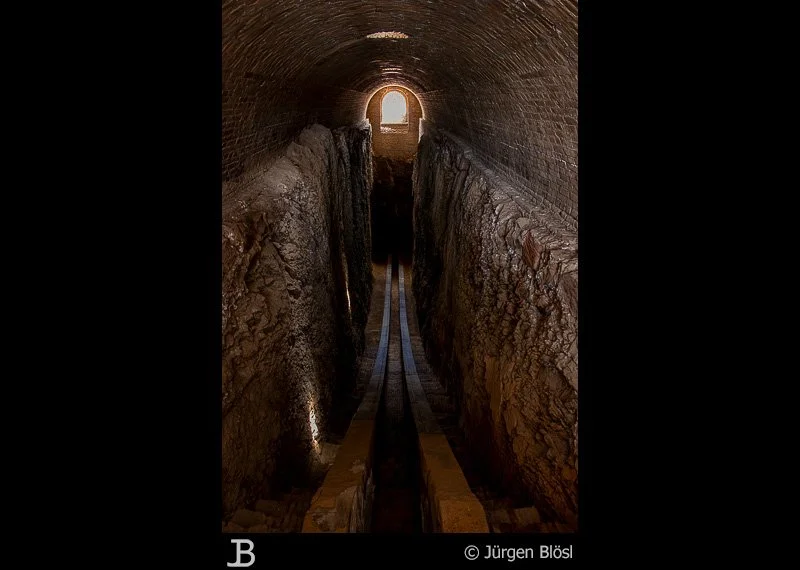
The final stop is Ulug Beg’s observatory [↗] - or what’s left of it. It’s not much: a long, covered corridor. Next to it, they’ve built a museum where you can learn about astronomy, his life, and his influence on European science.
We’re back at the hotel at 2:30 p.m. We’d agreed yesterday that there wouldn’t be quite as much talking and that we’d instead have an afternoon break or time for our own activities. Before I go up to my room, I grab a few cookies and some juice. That should be enough for now.
At 7 p.m., we meet up to drive to a family’s home and eat plov, the national dish of Uzbekistan. It’s something like a rice stew with meat. The dinner “with the family” turns out to be more like a dinner “at a family restaurant.” Tables are set up in the courtyard, and besides us, there’s a second SKR- and another group there. The plov is very greasy and the meat is rather bland - in short: not my cup of tea. In general, the food here is hearty and simple. Vegetarians or vegans in particular are likely to have a hard time here. But the desserts are excellent - from baklava to cakes.
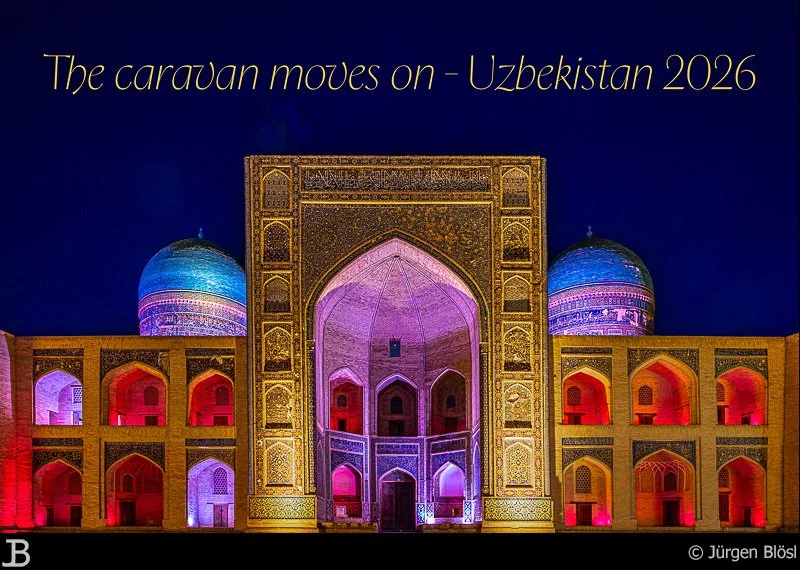
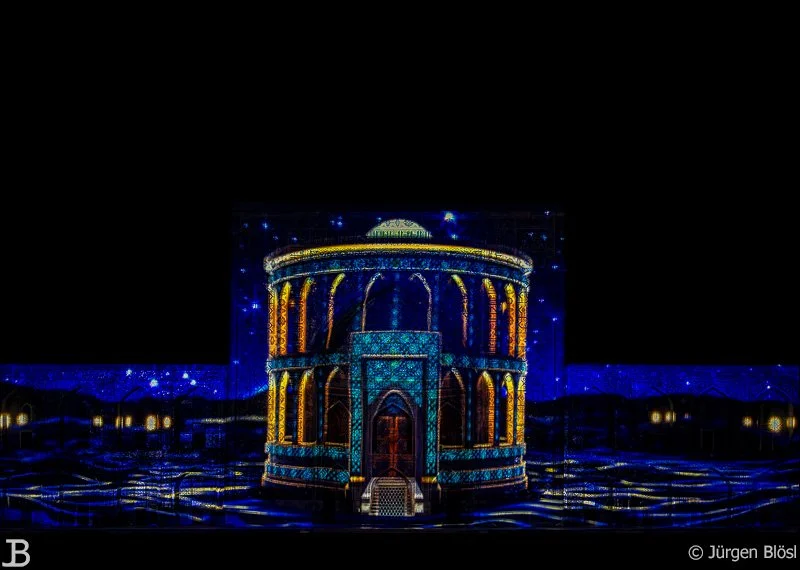
Shortly after 9 p.m., we head back to Registan to take photos of it illuminated. I’d already let the guide know beforehand that I’d be walking back on my own.
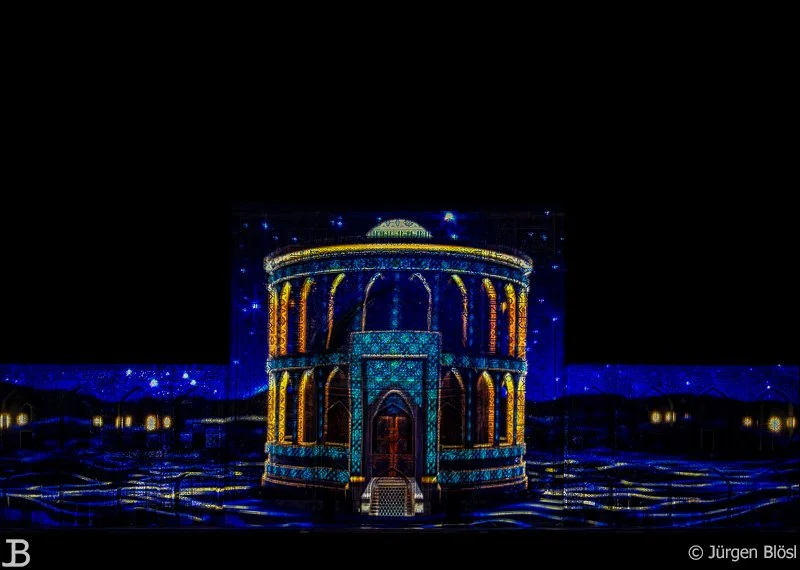
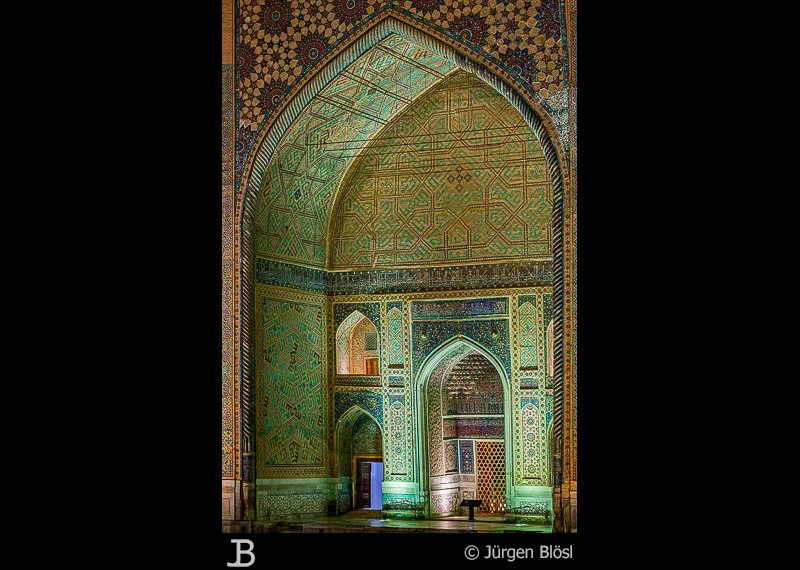
When we arrived, the light show was in full swing, and people were packed tightly together. Setting up a tripod was out of the question, not to mention getting a clear view of the buildings. So I made my way around the right-hand madrasa. There is a small open area there, and indeed there are only a few local teenagers. I set up my tripod, and promptly the show ends and the regular lighting comes on.
I take a few photos of the Koranic school across the square and then head to the other side to do the same there. Now all I’m missing is the view from the front.
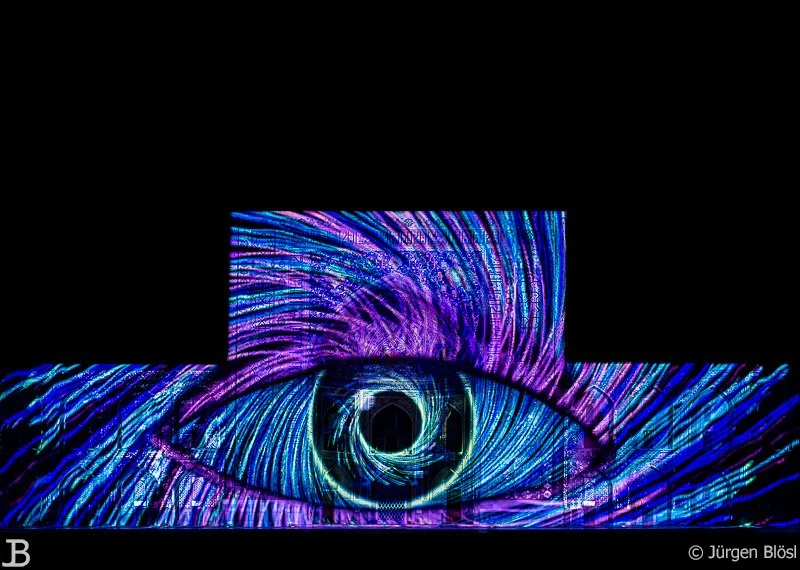
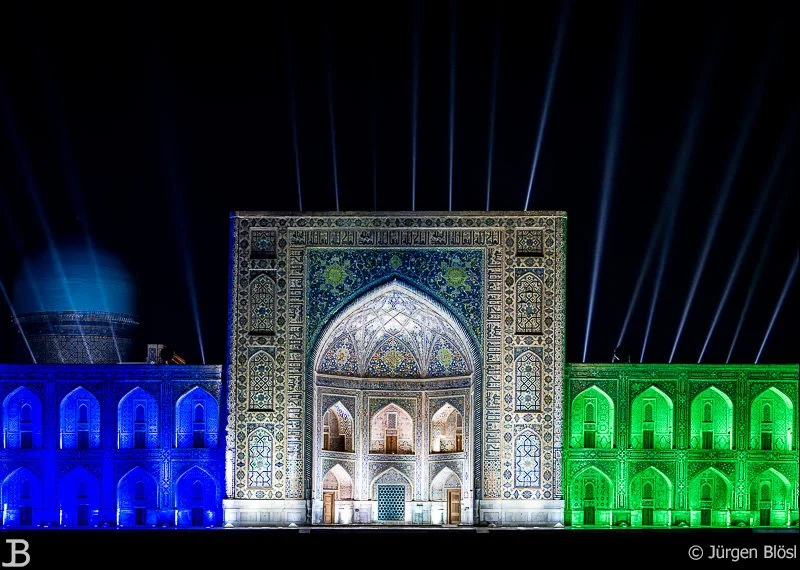
Actually, I’d expected hardly anyone left there. After all, the show had been over for 20 minutes. But I was wrong. Although the place is only moderately crowded, the front row is completely full, and it doesn’t look like people are about to leave. So I step back a bit. This also has the advantage that I’m standing a little higher and might be able to take photos over people’s heads. Just as I’ve set up my camera and taken a photo, the surrounding lights go out and the show starts again. Whereas it had been completely packed a couple of minutes ago, it’s now relaxed. A few people are jostling at the very front, but all around me it’s empty, and further back, people have made themselves comfortable on the stairs. In a cordoned-off area, there are about 30 chairs set up. For a fee, you get a truly exclusive view from there.
The show is very well done. You don’t understand a word, since everything is in Russian, but the storyline is clear enough even so. Toward the end, it gets very patriotic - and, considering the current living conditions of many Uzbeks, also pretty exaggerated. The achievements in biotechnology, for example, that they imply there, can hardly be imagined, even with the best will in the world.
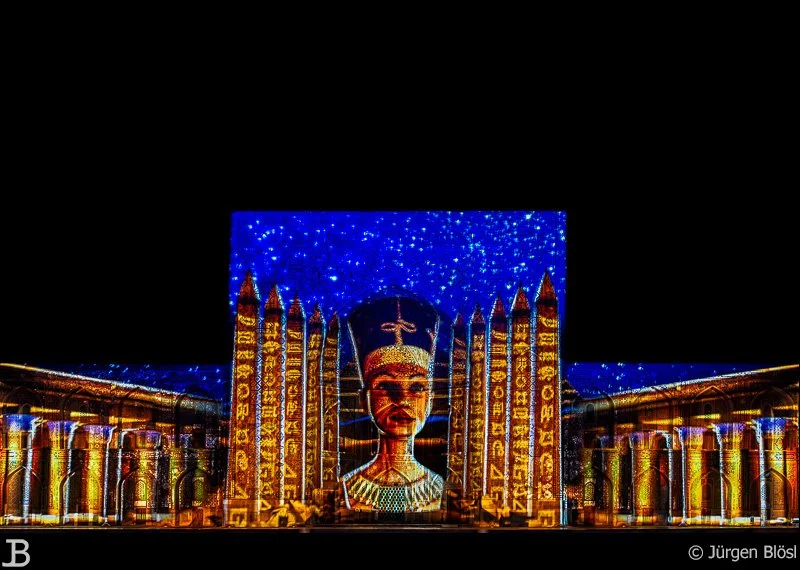
On the way back, I stop by the Gur-Emir Mausoleum again, which is also illuminated. Here, too, I’m approached and offered the chance to visit the grounds in exchange for an appropriate “donation.” Around 10:30 p.m., I’m back at the hotel.