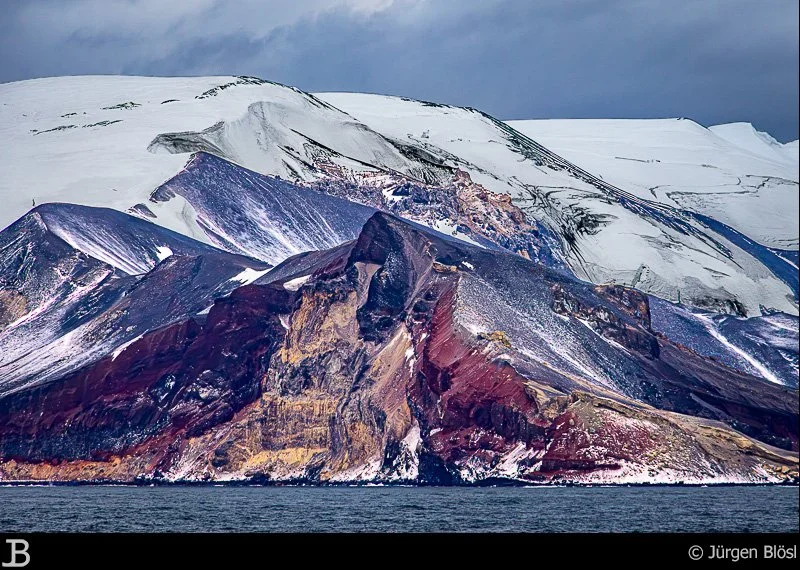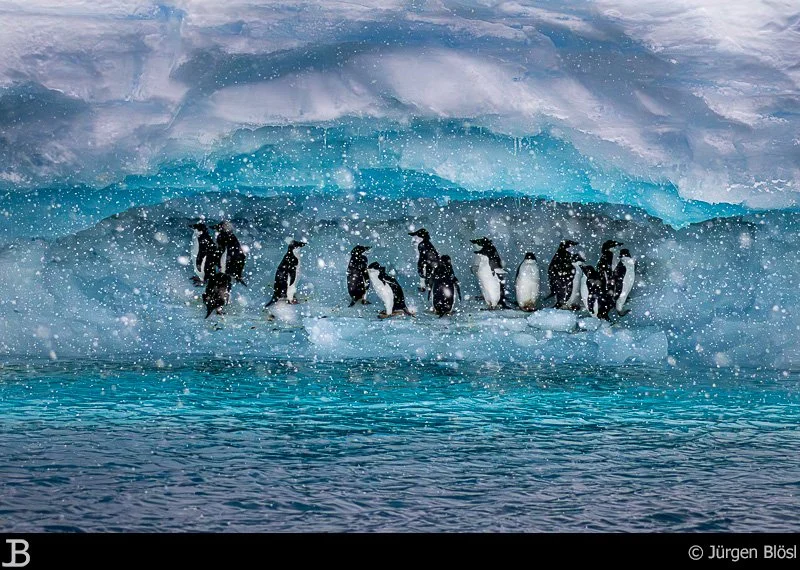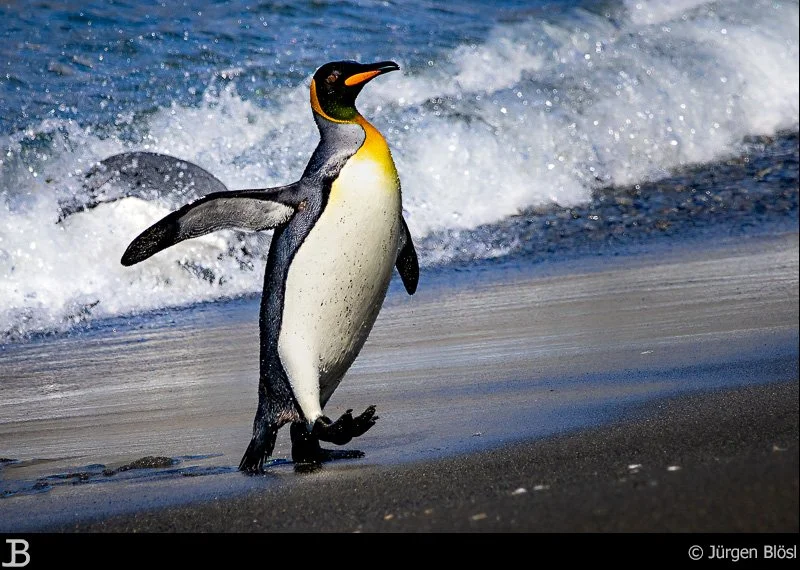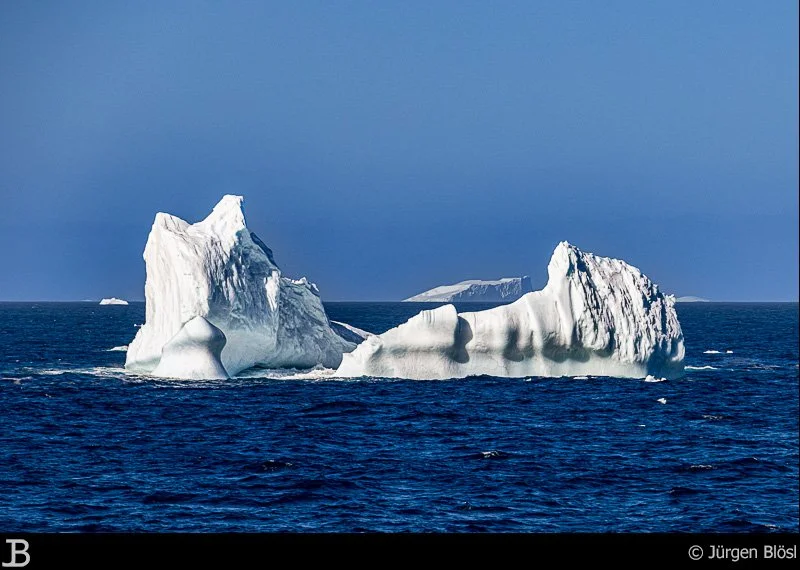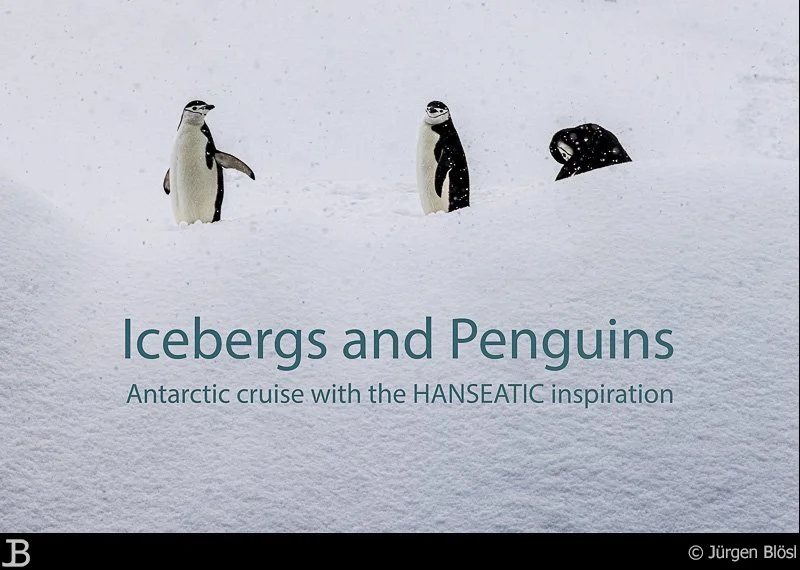
Icebergs and Penguins - Antarctic cruise with the HANSEATIC inspiration
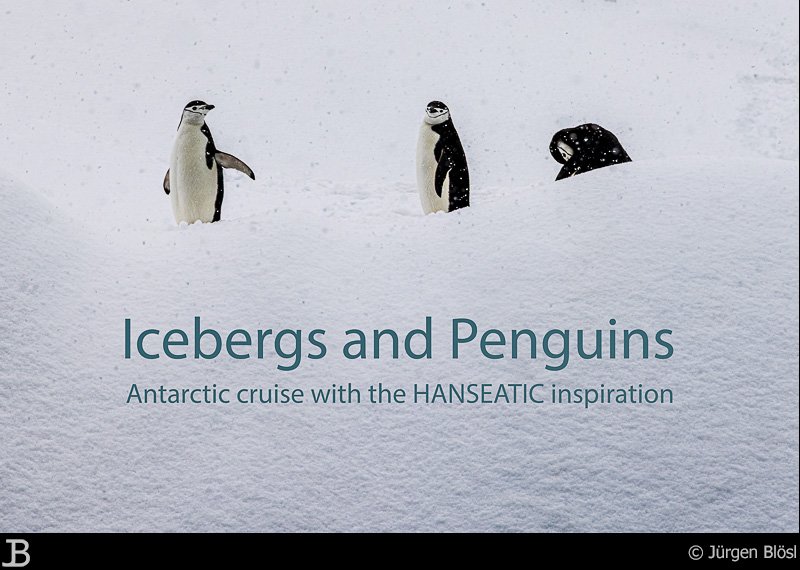
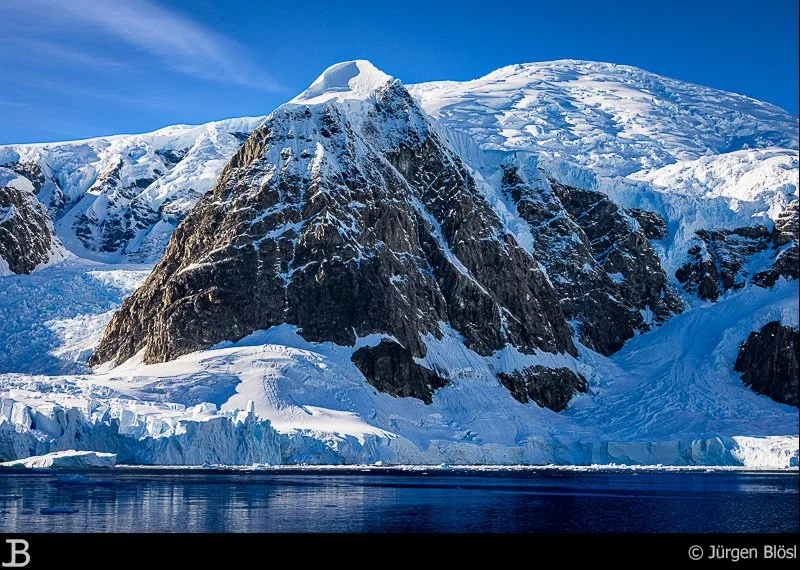
Antarctica, the seventh continent: the coldest, driest, and windiest place on Earth. From Germany's perspective, it is the other end of the world. In terms of size, Antarctica is 40 times larger than Germany and roughly the same size as the USA plus Mexico. Realistically, it can only be reached by ship, although in favorable weather conditions, at least the Drake Passage can be crossed by plane.
I had been eyeing a visit for almost 10 years until I took the plunge and booked it almost 2 years ago. It's not cheap, especially if you're traveling alone. Not to mention getting to the starting point of the trip. This is usually Ushuaia [↗], the southernmost city in the world (even though Chile likes to refer to Puerto Williams, which, with 2,300 inhabitants, is not really one). The distance to the Antarctic mainland is significantly shorter from there than from Australia or South Africa.
Since Antarctica is one of the best-protected ecosystems in the world, the type of ship you travel on makes a big difference. In many places, a maximum of 100 people are allowed ashore at any one time. Ships with more than 500 passengers are completely prohibited from going ashore. Based on this, there are four classes of ships:
Ships with more than 500 passengers. This includes all classic cruise ships. These are allowed to sail to Antarctica but are not allowed to go ashore. Usually, they are also not ice-proof, so they have to turn back quite quickly when the weather turns bad. With a little luck, you can still see penguins, whales, and icebergs. However, this is usually from a considerable distance.
Ships with 201-500 passengers. These ships can offer shore excursions. However, due to the 100-person limit, there are significantly fewer than on smaller ships. Some landing sites are also completely off-limits for these ships.
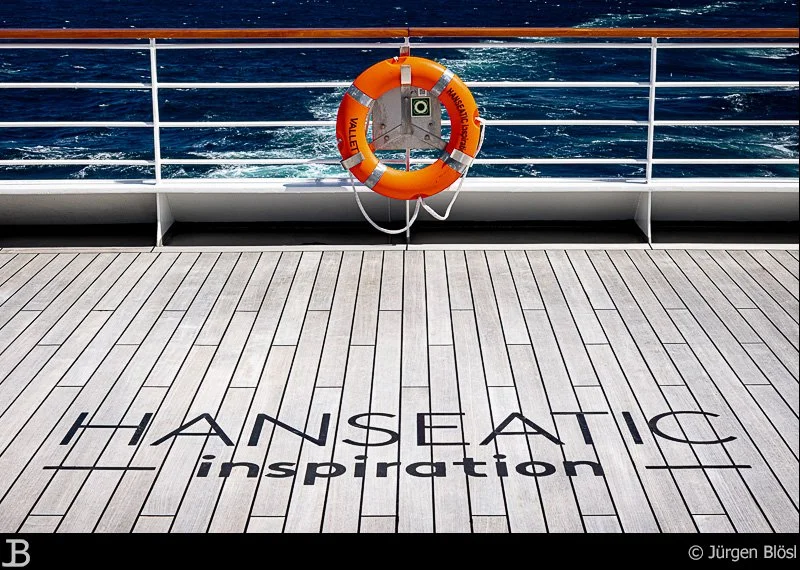
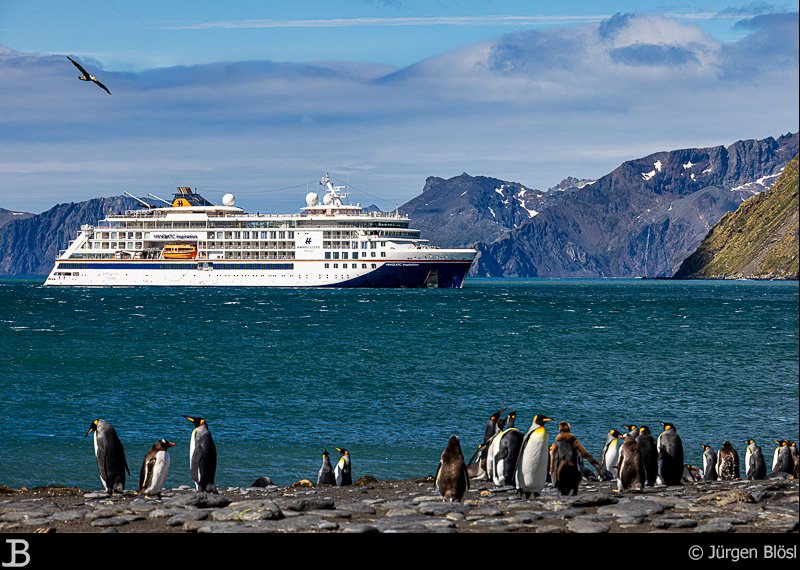
Ships with a maximum of 200 passengers. Here, there are usually two shore excursions (or Zodiac cruises) per day. The HANSEATIC inspiration [↗] is actually slightly above this limit. However, only a maximum of 199 passengers are taken on board in the Arctic and Antarctic.
Ships with significantly fewer than 200 passengers. These are often more basic ships, including former icebreakers. The focus here is on very intensive encounters with Antarctica, often including overnight stays on land. Less emphasis is placed on comfort. These trips are not necessarily cheaper, as the operating costs for such a trip are of course still the same.
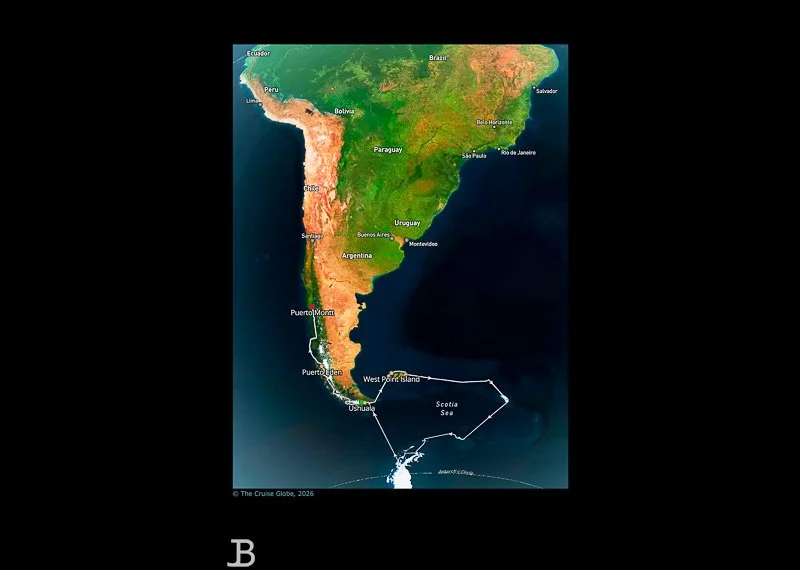
And last but not least, you have to decide whether you just want to go to Antarctica and back, or if you want more. Trips from Ushuaia to Antarctica and back usually take a good week and are significantly cheaper than longer alternatives. However, the cost of getting there remains the same, of course. It quickly became clear to me that I definitely wanted to see the Falkland Islands and South Georgia. Eventually, I found this trip at the end of the season, which also visits the Chilean glaciers and only ends in Puerto Montt. The fact that it was also cheaper than the alternatives offered by American competitors was, of course, a bonus.
As far as the details of the trip are concerned, it remains an expedition. There is a rough plan, but where exactly we go depends on the wind and waves.