On the way to Antarctica - Icebergs and Penguins - 6
February 6-7, 2026 - On the way to Antarctica
Yesterday evening, the ship began to move significantly for the first time. Not dramatically, but clearly more than before. Interestingly, there was no warning from the bridge as there had been at the beginning of the cruise. They probably assume that we are now experienced enough to take care of ourselves. So I tidy up a few things that are lying around, but without overdoing it. The electronic devices are allowed to continue charging on the desk. And I slept well.
In the morning, the ship is still moving more than usual, although it feels less than last night. So I get out of bed, take a shower, and after a first coffee in my cabin (the restaurants are still closed), I go to breakfast at 7:30 a.m.
Today we have another day at sea on our way to the South Orkney Islands [↗]. The schedule gives me plenty of time to work on my photos again. I might watch the morning lecture in my cabin and skip the afternoon one. I'll also opt out of the Skat/Bridge/etc. afternoon. The only thing I don't want to miss is the Re/PreCap at 6 p.m. (although all lectures, including this one, can be viewed live or as a recording in your cabin).
At 10 a.m., I finally convince myself to go on the running machine for an hour. While I'm running, I even see a whale blowing through the window again. This time, however, we don't stop.
The buffet restaurant is serving freshly prepared beef tartare for lunch today. Although it's a day at sea and many people had a late breakfast, it's already packed shortly after opening. Never mind, I'll go to the full-service restaurant. It's half empty and the service is accordingly fast. I didn't miss the beef tartare either.
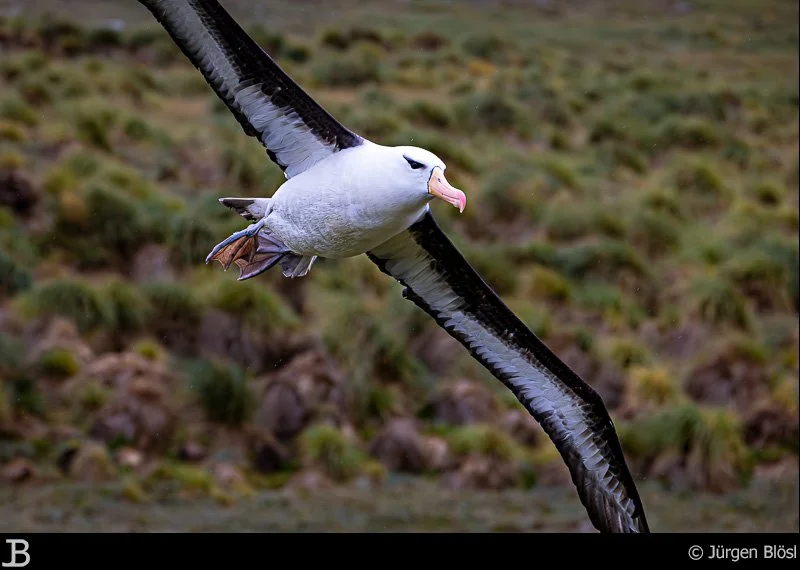
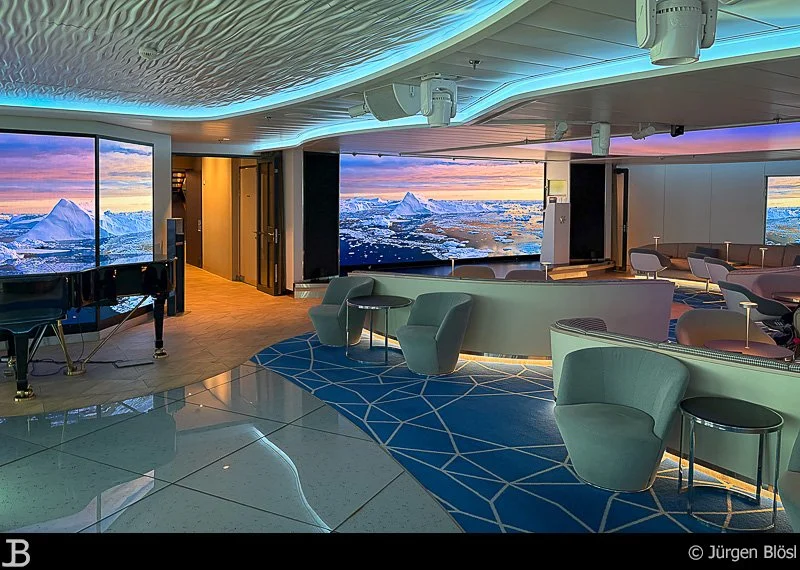
I spend the afternoon editing photos, watching the recording of the morning's lecture on seabirds, and finally attend the Re/PreCap in the Hanseatrium. For dinner, I just grab a few crackers and some cheese to take back to my cabin.
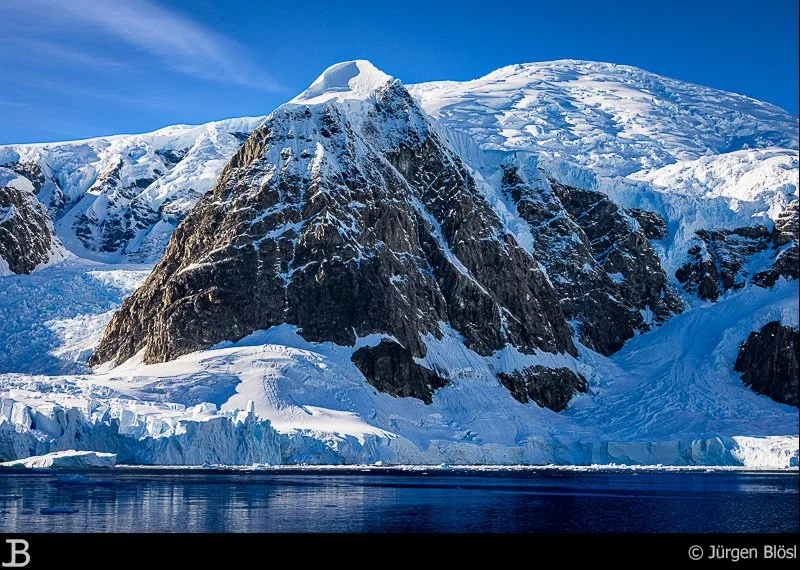
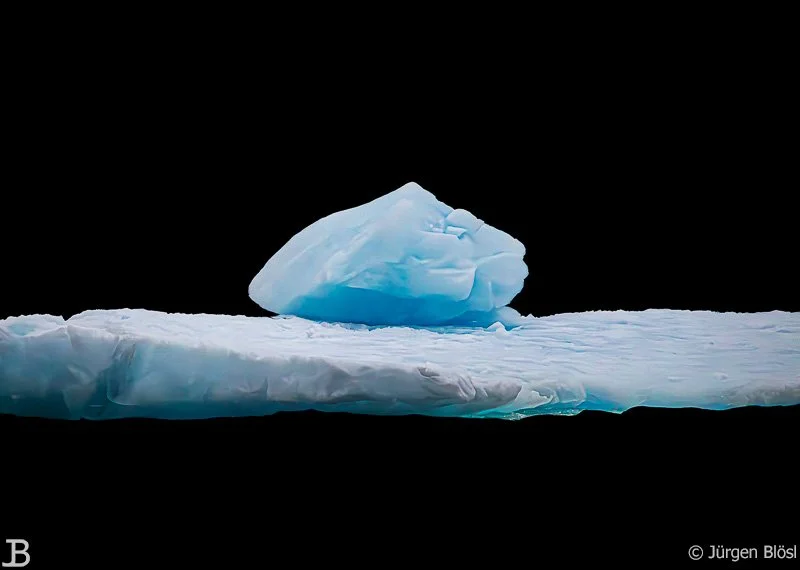
During the night, we gain back the hour we lost on the way to Falkland. Accordingly, I wake up early. The view from the window shows fog, light snowfall, and ... icebergs.
So I dress warmly and am on deck at 6 a.m. The front decks downstairs and upstairs are closed, but on the pool deck you can get to the stern and also see to the side without any glass panes to obstruct the view. It's quite pleasant at the stern, but as soon as I step out of the lee, an icy wind blows around my ears.
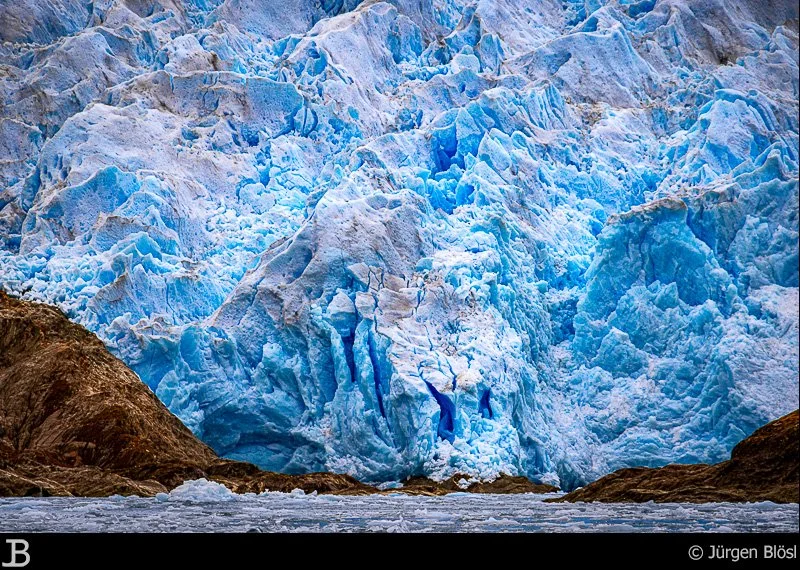
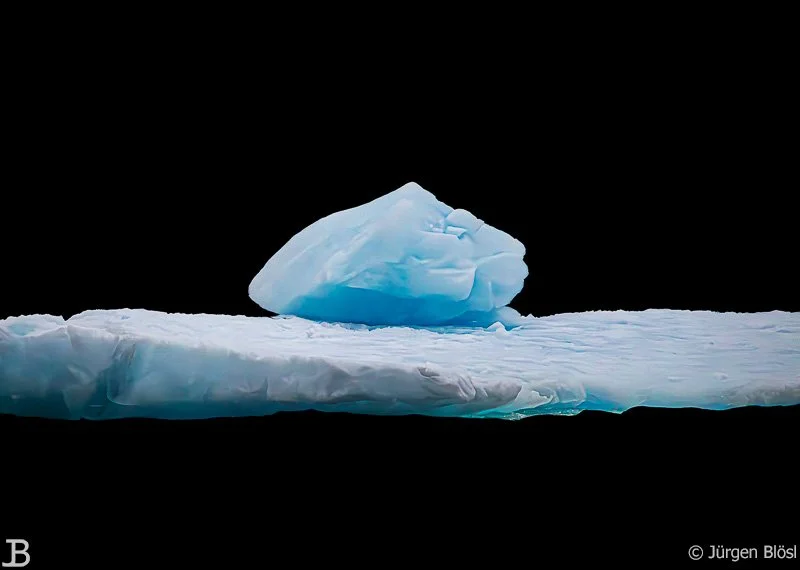
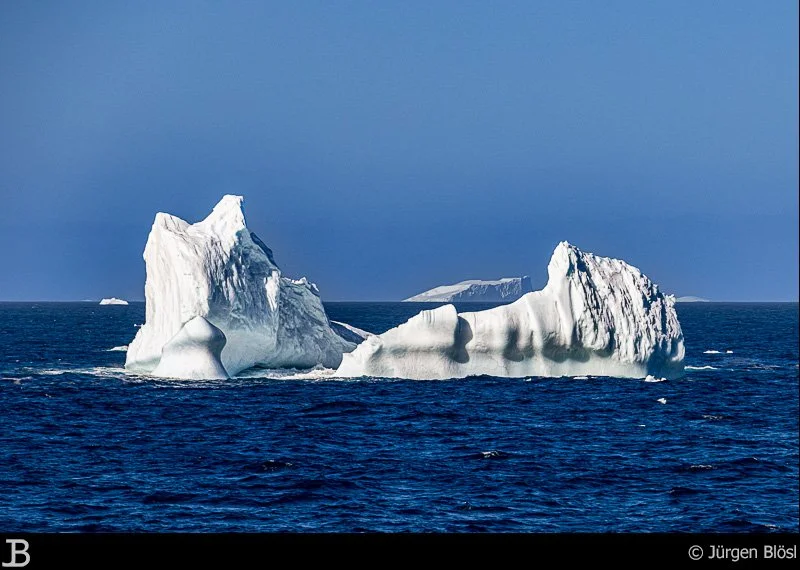
The shapes of the icebergs are very variably. From large table mountains to small splinters, everything is there. Here, I also see for the first time this blue color on some icebergs, which is created when the ice contains very little air.
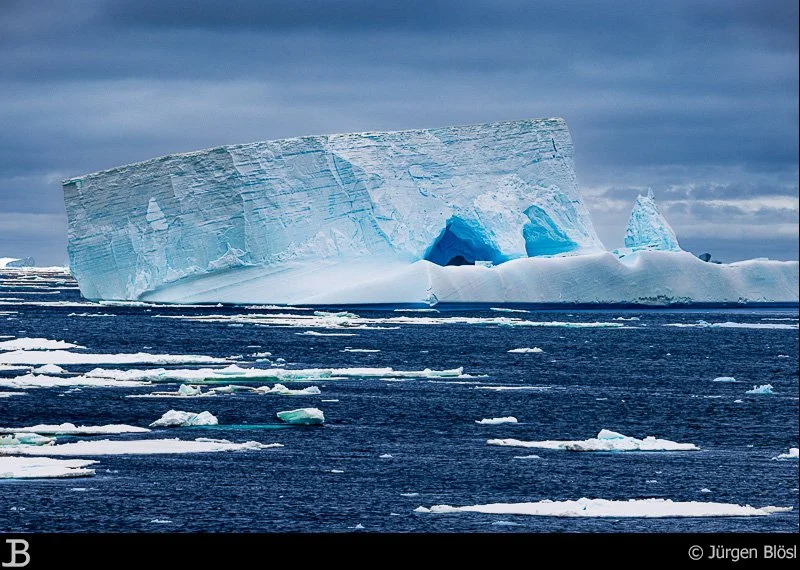
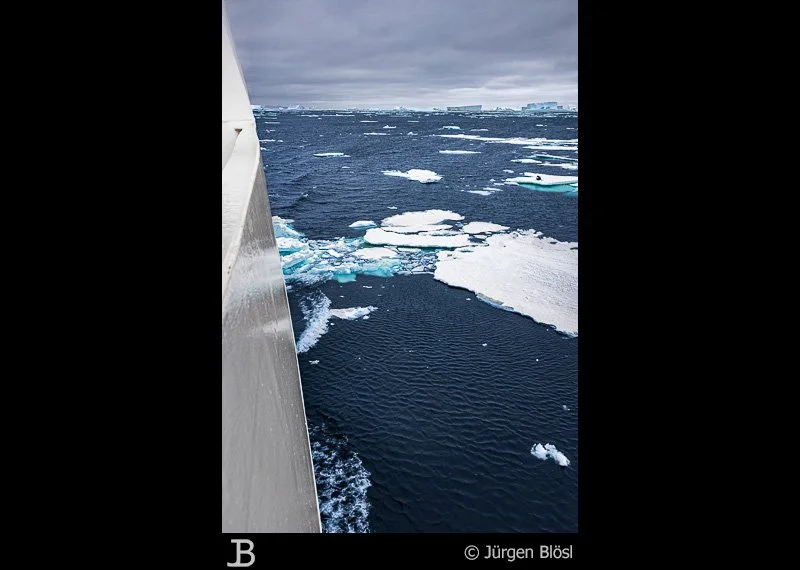
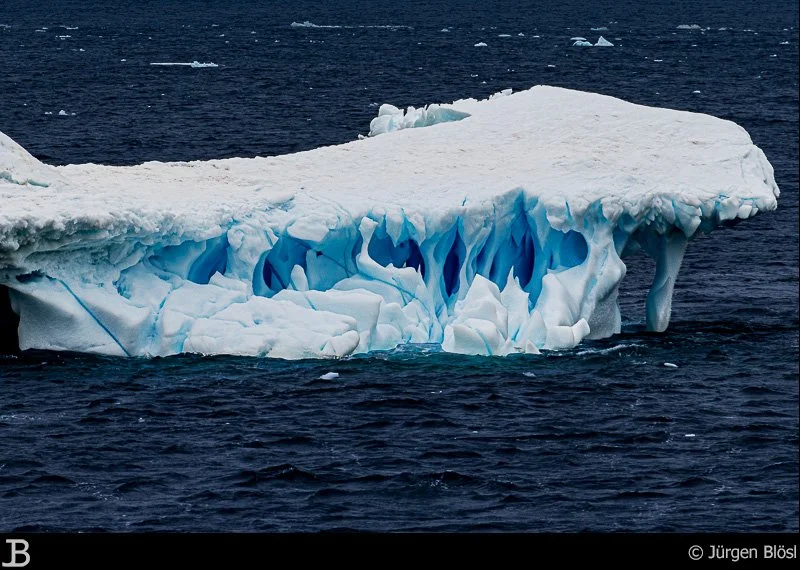
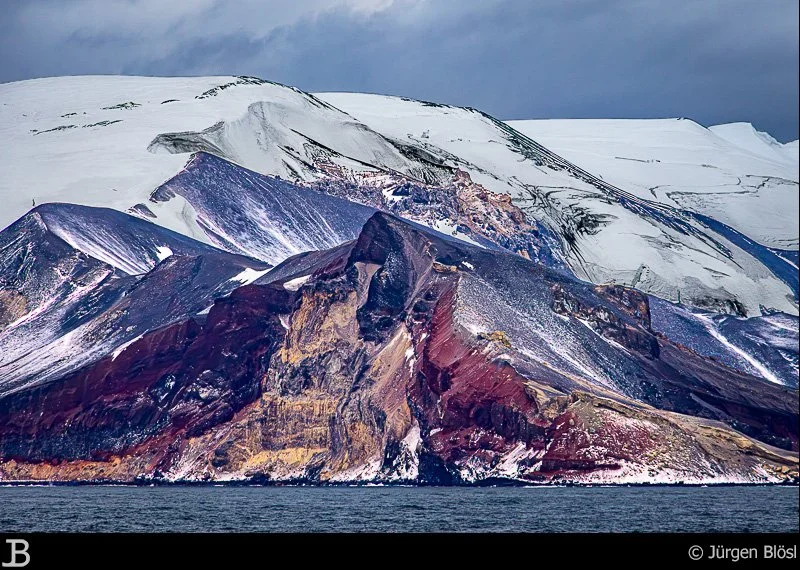
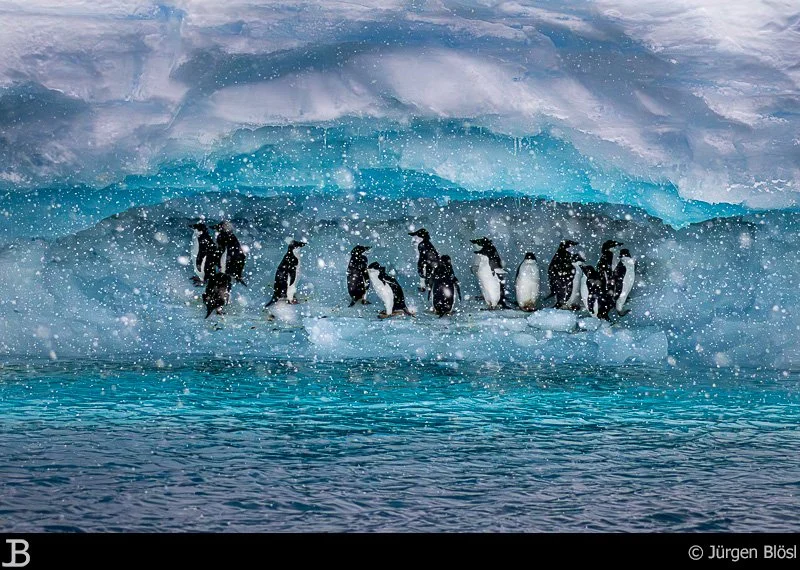
We have now officially arrived in Antarctica, even if it is only a line on the map: we are south of the 60-degree mark. To be precise, we have reached Coronation Island, the largest island of the Southern Orkney Islands. We are in Shingle Cove, a small bay with another penguin colony. Due to limited space, we will cruise for about 20 minutes in the Zodiacs and then go ashore for only a short time, a maximum of 45 minutes.
As I've written before, cruising with the Zodiacs is always fun. This time, the landing site is quite rocky, and then we have to climb about 30 meters up a slope. It looks more slippery than it actually is. Some guests followed the recommendation and took their hiking poles from their cabins. But if you want to take pictures, you never know where to put them. Besides, the metal tips of the poles don't grip on stone anyway.
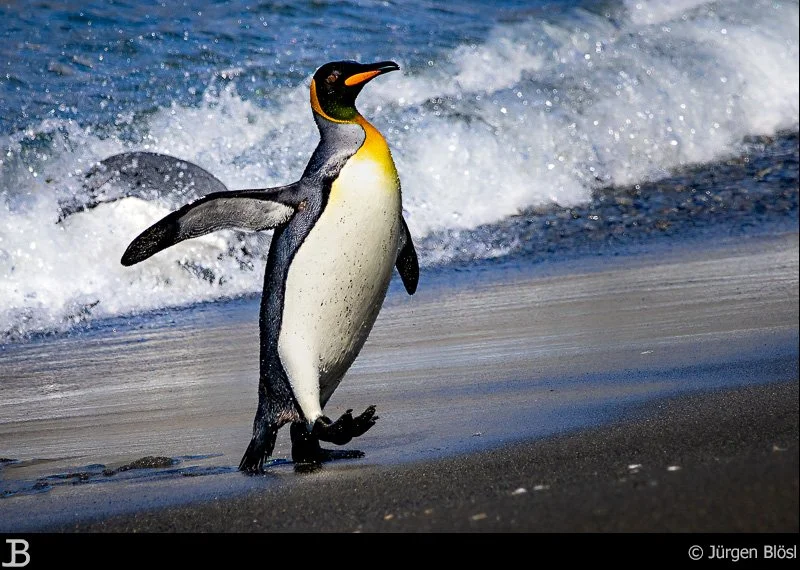
There isn't much to see here. The colony is in its final stages. Most of the animals are already back in the sea. We see many more dead animals here than before. We are assured that this has nothing to do with bird flu, but is completely normal at the end of the breeding season.


For lunch, the team from the buffet restaurant has set up a “Pölser lunch” on the pool deck. There are supposed to be Danish hot dogs and other specialties. Well, let's see.
In addition to hot dogs, soup, smoked pork chops, and a snack platter, there are also fried gnocchi with mushrooms and quark dumplings, which I am happy to enjoy. Sparkling wine, wine, beer, etc. are also served. Those who wish can also have mulled wine or schnapps.
Meanwhile, the ship is making its way through ice fields towards Point Wild on Elephant Island, which belongs to the South Shetland Islands [↗]. Every now and then, there is quite a lot of rumbling and crunching. It's a good thing that the inspiration has the highest ice class. Above that, there are only icebreakers.
We are scheduled to arrive late tomorrow morning. While we usually reach our destinations almost to the minute, the captain has already made allowances here. Due to the ice situation, the route and speed are difficult to predict.
At 4:00 p.m., there is a presentation by a department head from the Ministry of the Environment. I already mentioned that we have an inspector on board. He has agreed to explain the political context and developments surrounding the Antarctic Treaty [↗]. He does this in a very interesting way, and even though the Hanseatrium is not full, the subsequent question and answer session is by far the most intense of all the lectures I have attended.
As he has been inspecting the ship over the last few days, I also learn some details that I did not know:
It is allowed to enter areas that are up to 60% covered by ice.
It has an emergency bridge measuring just 5m² from which the ship can be operated if the bridge becomes inoperable.
Wastewater is treated but still may only be discharged once the Antarctic has been left.