Buchara - The caravan moves on - Uzbekistan 2026 - 4
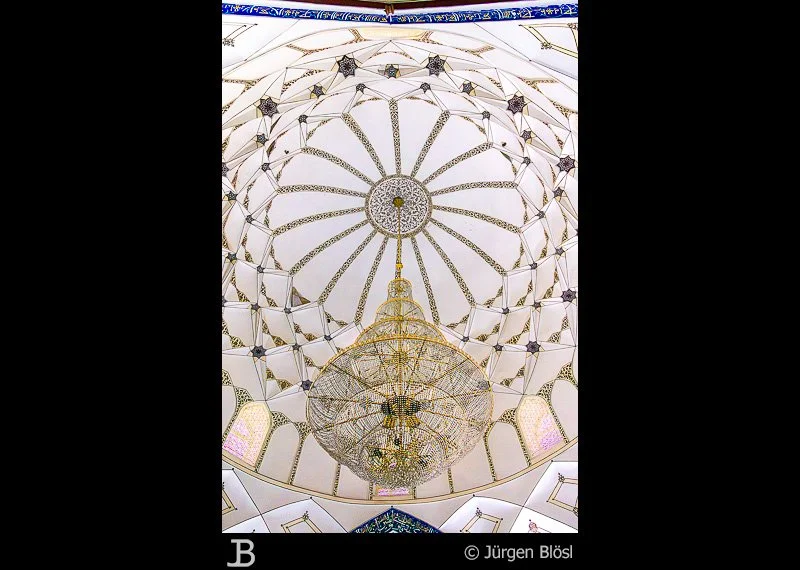
Buchara
Today will be a long day of driving. We have 450 km or 8 hours ahead of us. At first, we’ll be on a country road, and later on a concrete highway.
The country road is wide enough for four lanes. But the shoulder is in such poor condition that you can’t really use it. The rest of the road is also riddled with potholes, or the asphalt is missing entirely. The drivable section is treated as a three-lane road. Overtaking is done by assuming “the other driver will slow down.” Surprisingly, people hardly ever honk their horns. I heard it only once the entire day. But that will change in the coming days as we head further east. Our driver is gradually adapting to local customs.
After 2.5 hours, we reach the highway. The landscape is changing now, too. Whereas it was green and farmland up until now, we’re now driving through a desert dotted with small bushes. The road runs dead straight through this monotonous landscape. To check whether the driver is still fit to drive, the car occasionally asks him to pull over to the right and wait a few seconds. If he completes the task, he can continue. Just like in the U.S., the fake police cars made of plywood - designed to encourage drivers to obey the speed limit - are quite amusing.
Shortly after 6 a.m., we arrive at our hotel. This is yet another renovated, ancient building, located right in the city center across from the popular Lyab-i-Hauz complex [↗]. Once again, I have a room facing the courtyard and shouldn’t notice much of it.
The city [↗] is absolutely packed. One of our fellow travelers even had to stay at a nearby hotel. This becomes obvious as soon as I head out quickly after checking in. I walk to the Poi-Kalon complex [↗], which - according to the information I gathered beforehand - is also supposed to be beautifully lit after sunset. From there, I continue crisscrossing through the alleys.
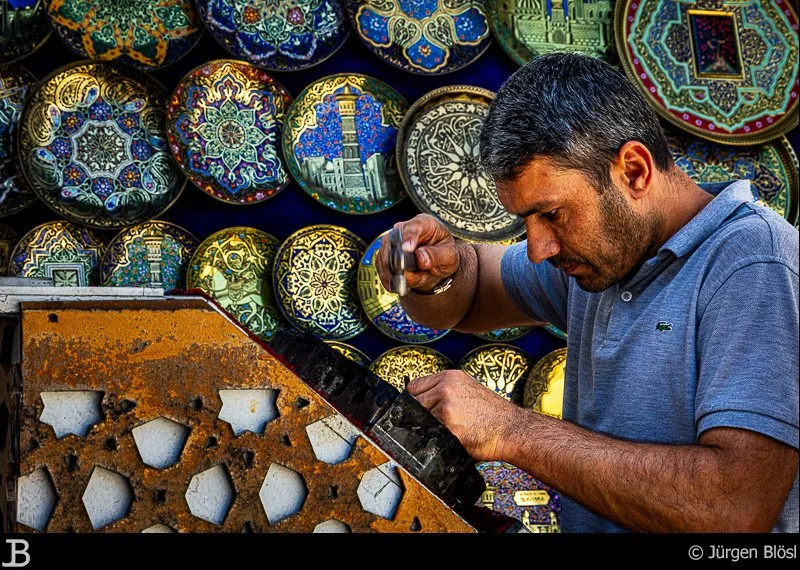
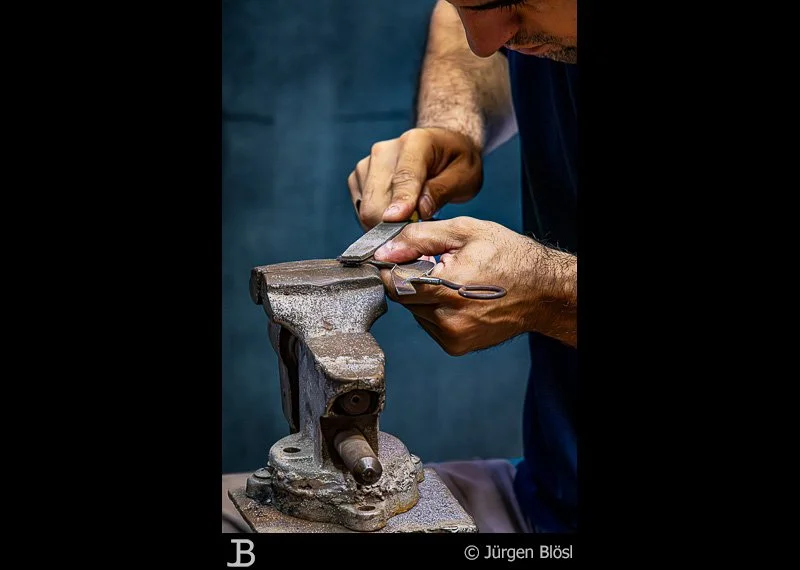
While restaurants and hotels dominated the scene in Khiva [↗], in Bukhara it’s the “workshops” - small shops that claim the products they sell are made right there. Every now and then, there are demonstrations as well.
I can’t find a nice spot for the sunset, even though I head to one of the rooftop restaurants specifically for that purpose. Finally, I find one near the fortress where a section of the barrier is missing, allowing me to photograph the Poi-Kalon Ensemble from a distance. But it’s not really that great either.
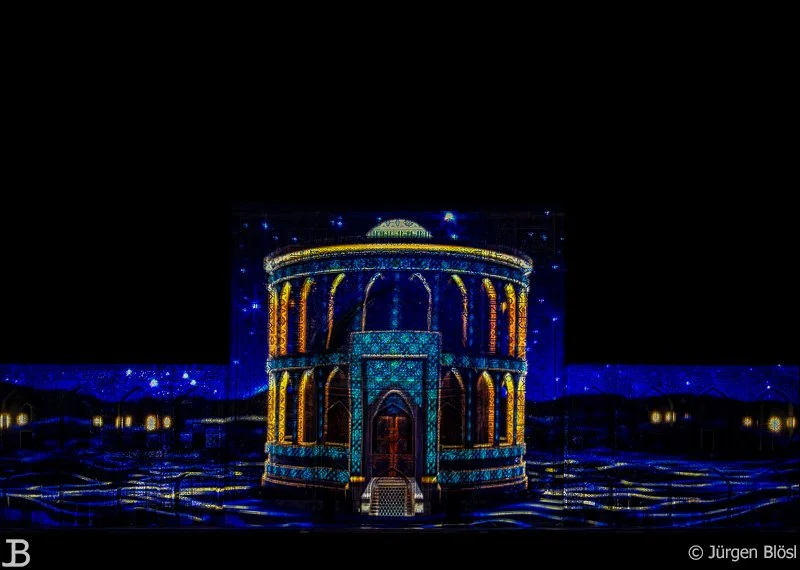
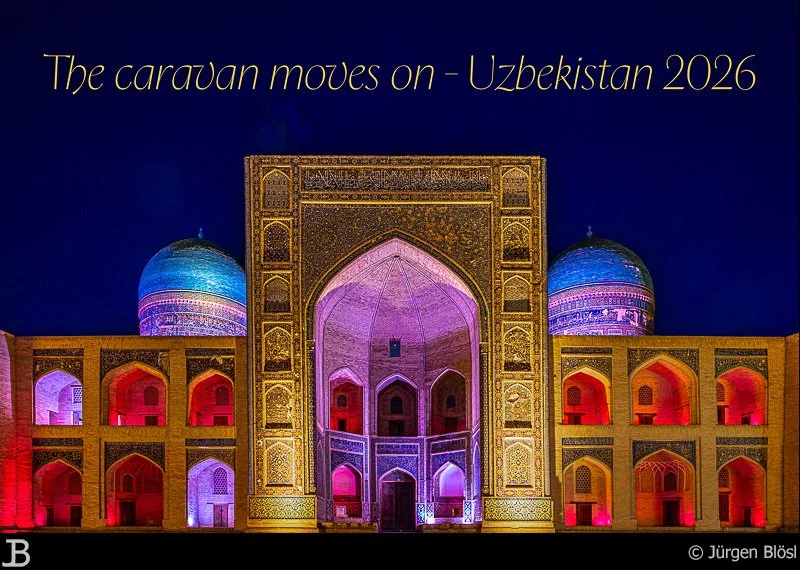
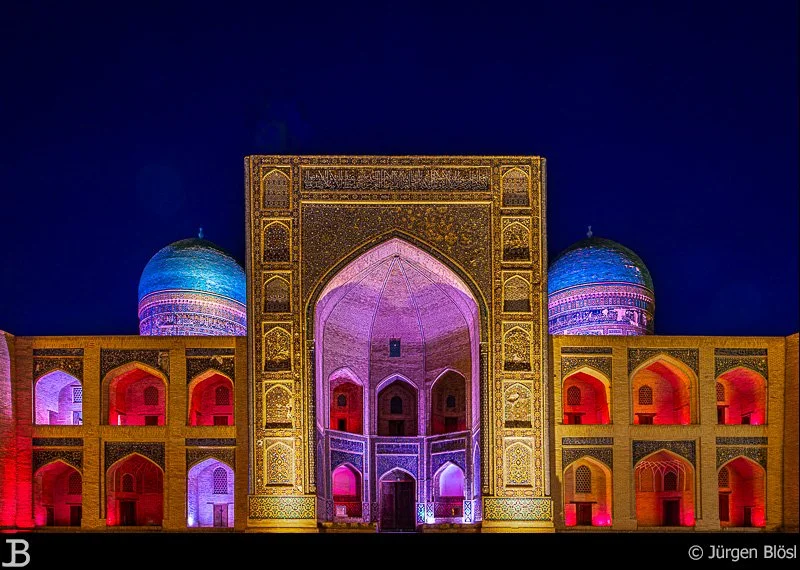
Shortly afterward, the lights on one of the domes are turned on. Of course, I want to photograph that too, even though it takes quite a bit of patience until the square in front of it is clear of people.
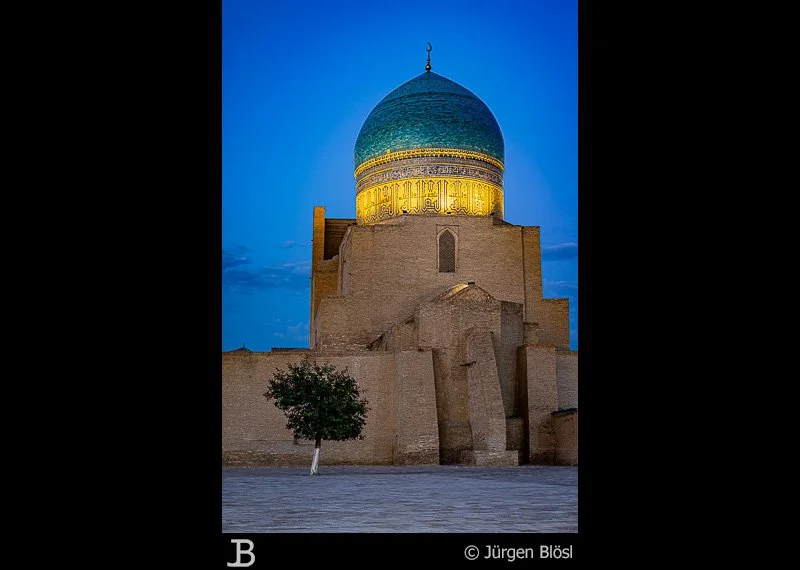
Contrary to my expectations, the central square of the Poi Kalon complex [↗] isn’t illuminated today. I make my way back to the hotel in a zigzag through the still very bustling city center. Before returning, I run into most of the other tour participants. But since they’re about to leave anyway, I don’t join them; instead, I retreat to my room and do my “homework.”
At 6 a.m. sharp the next morning, I leave the hotel to take a stroll through the city before the tourist crowds set out.
They’re hardly to be seen at this hour, yet the city isn’t empty. Many locals are walking swiftly through the alleys. Whether they’re on their way back from morning prayers or heading to work is hard to tell. Some are simply buying their bread for the day. Through an ordinary window with no signage, they’re serving non - the pastries we’d already seen being baked in Tashkent.
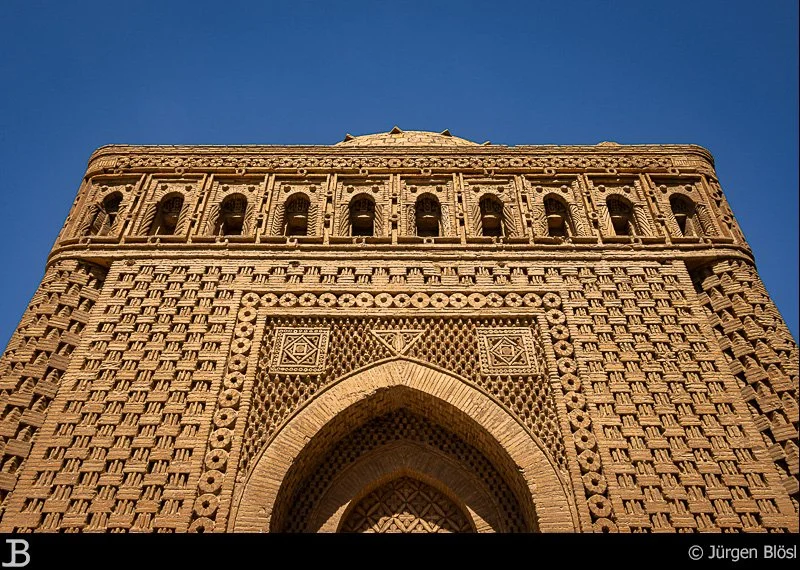
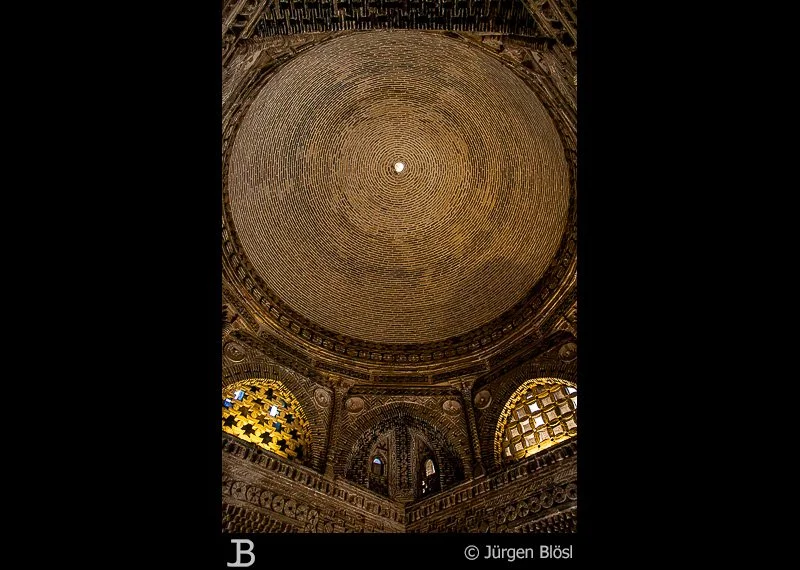
At 9:30 a.m., the official part of the day begins. We drive to an amusement park - not to ride the Ferris wheel or swan boats, but to visit the Ismail Samani Mausoleum [↗]. Built in the early 10th century, it is likely the oldest architectural monument in all of Central Asia. It survived Genghis Khan’s rampage because, over time, the building was completely buried under sand and mud from floods and landslides. It wasn’t rediscovered until 1926–28 by Russian archaeologists.
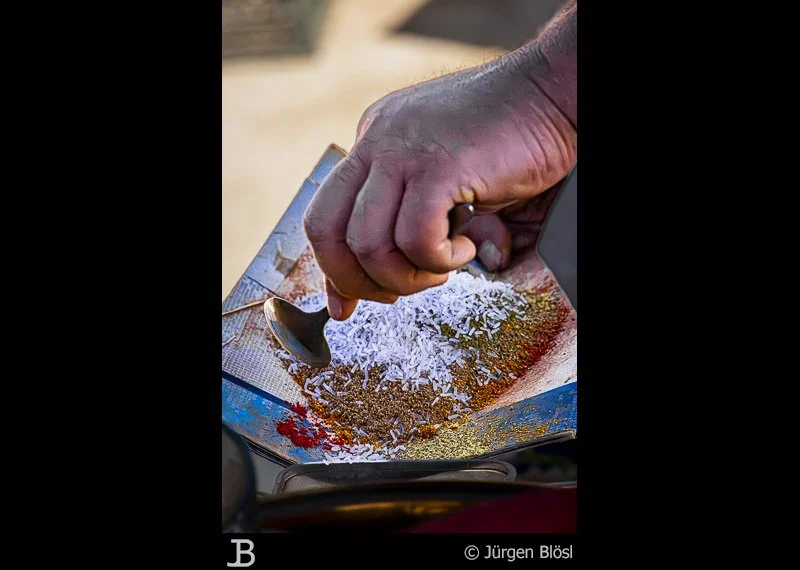
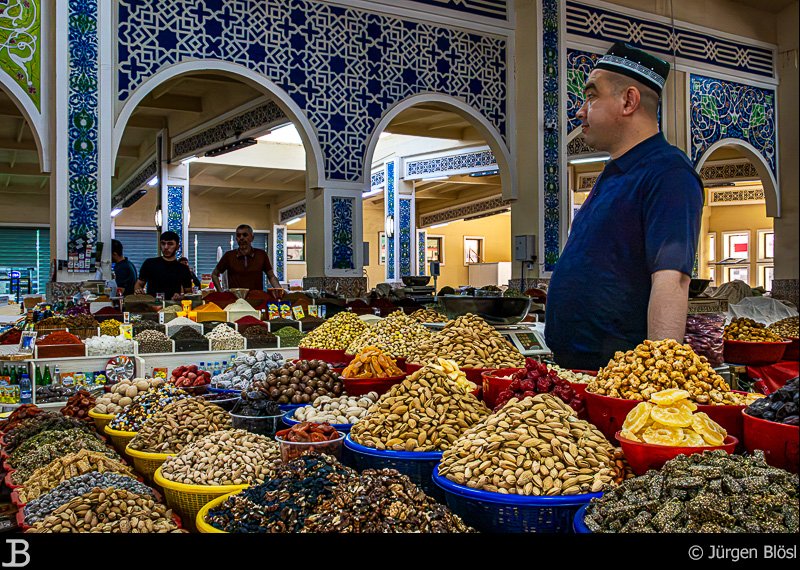
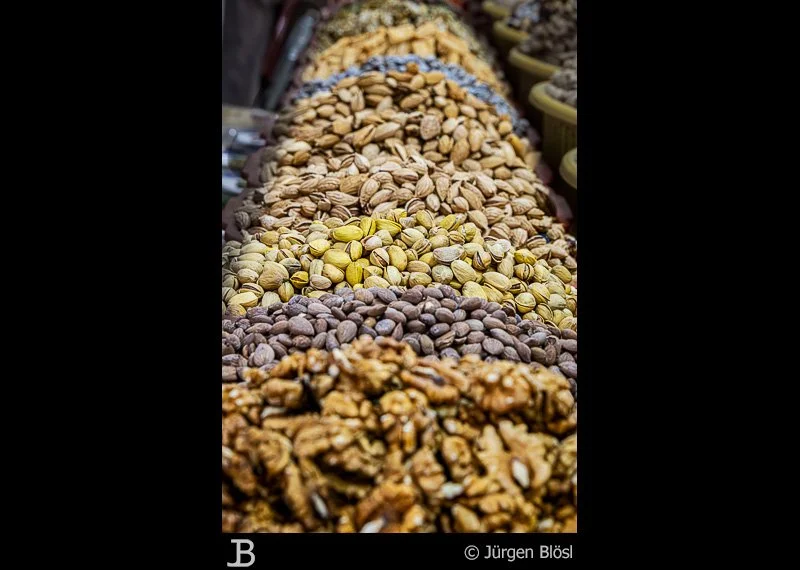
There’s a large market nearby, mainly for food. It seems that in the central hall, it’s mostly tourists who buy the tea and spices on offer. The locals buy from the vendors in the outer areas.
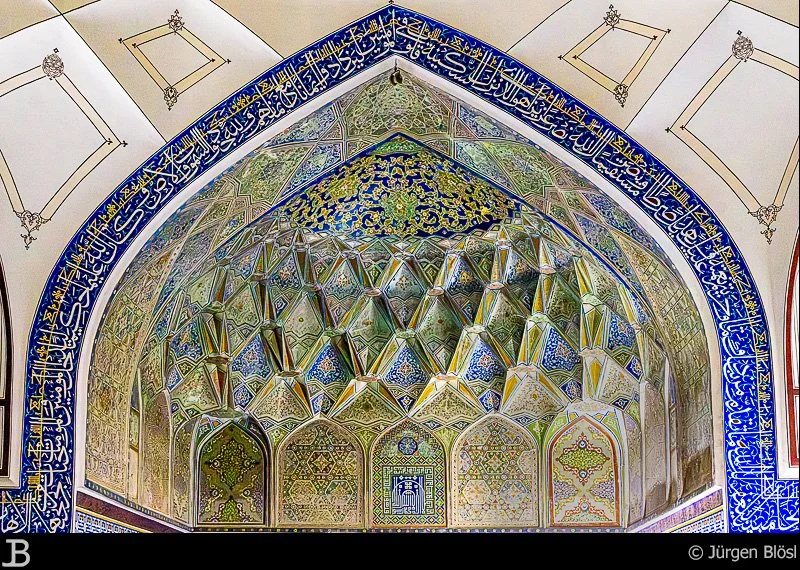
The citadel isn’t really worth seeing. Completely destroyed by the Soviets to drive out the local ruler, they subsequently rebuilt some of the buildings. Approximately three-quarters of the area, though, is simply wasteland. The buildings contain a wide variety of exhibits, ranging from stuffed animals to coins.
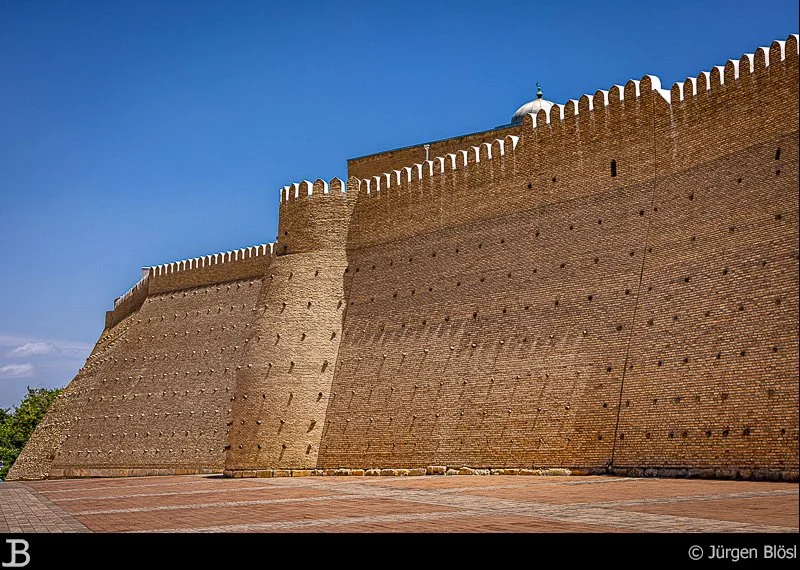
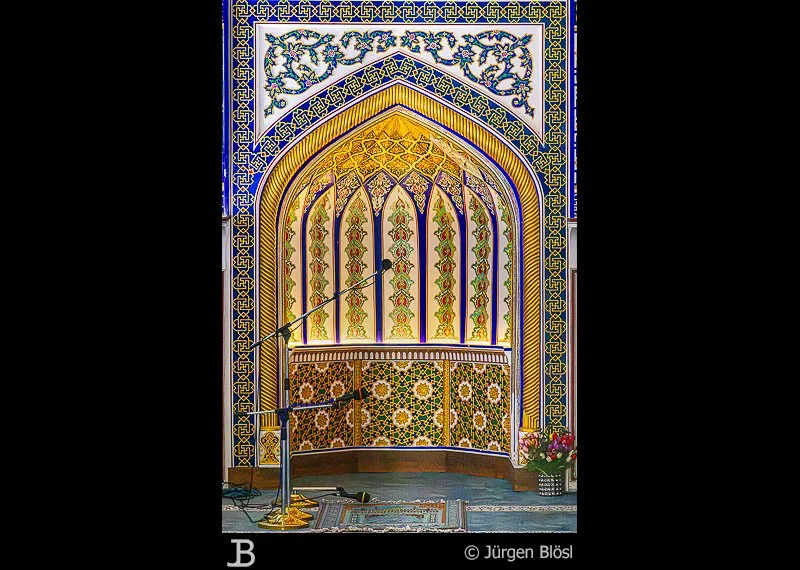
The final highlight of the sightseeing tour is the Koranic school of the Poi Kalon complex. Since I already suspected that we’d be going inside, I skipped visiting it yesterday afternoon. From here, we make our way back to the hotel through the alleys that have become quite familiar to me by now.
At 2:00 p.m., we’re back at our starting point. Time to get out of the sun. It’s 30°C, but dry with a light breeze. Still, it feels good to come back to the room, which is cooled to 24 degrees.
Next up are the usual tasks - backing up photos and writing this report. There’ll still be time to sort through the photos and maybe edit a few of them. We’re not meeting for dinner until 7 p.m.
At 8:30 p.m., we’re back at the hotel from dinner. I just quickly go up to my room, grab my camera and tripod, and head out again.
I want to go to the other side of the fortress, where we were this morning. On the way, I pass the Poi Kalon complex once again. And what do you know - today the complex is lit up, too. However, it’s still absolutely packed. So I save that for later and keep going.
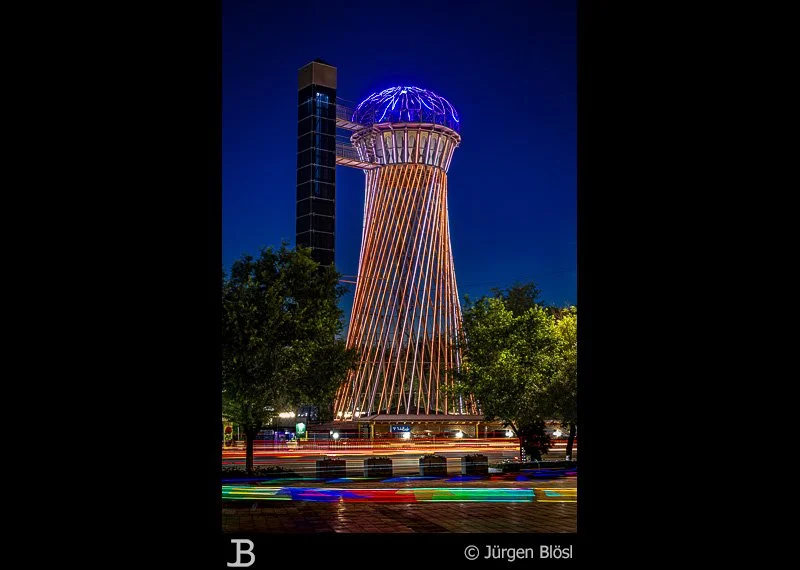
My first photo stop is the former water tower [↗], which has been converted into a viewing platform and is also lit up. Then, as mentioned above, I head to the neighboring Bolo-Hauz Mosque.
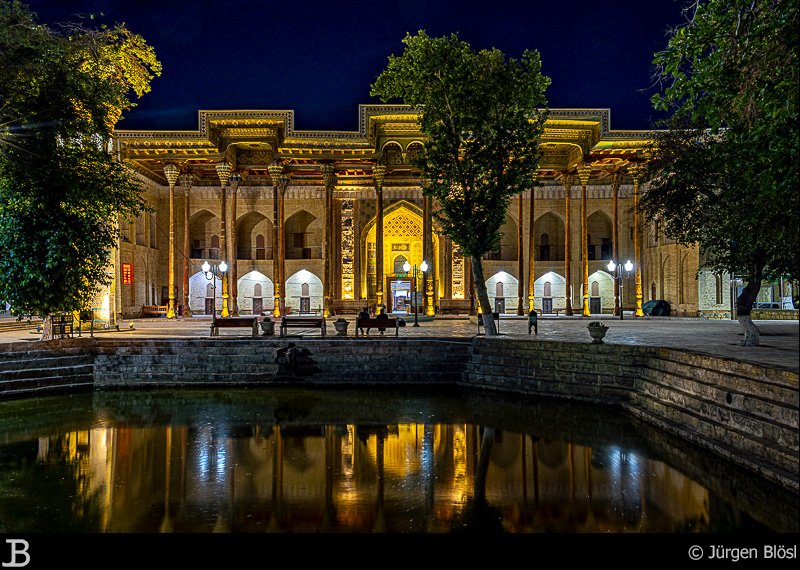
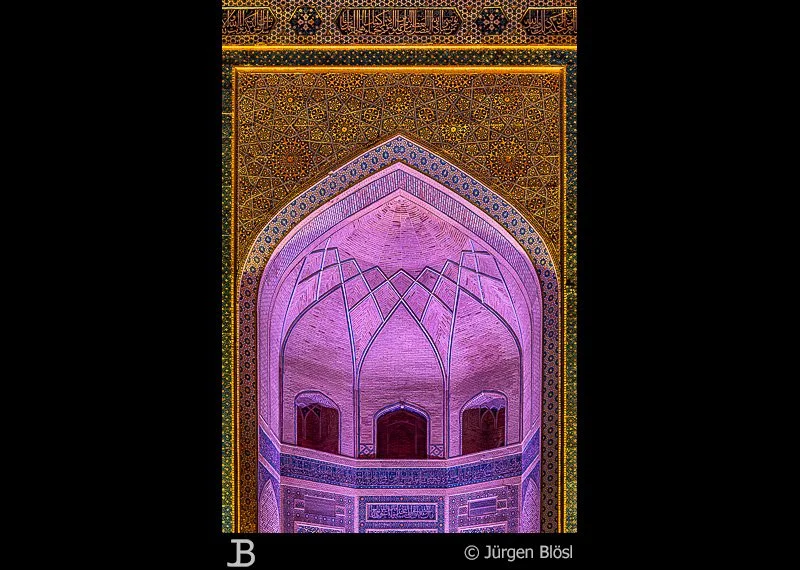
On the way back today, I walk directly to the spots I’ve set out to visit - especially the Poi-Kalon Ensemble. It’s still very busy, but at least I can set up my tripod and take a few pictures without much disturbance. After just under two hours, I’m back at the hotel.
The next morning, we visit destinations outside the city center. Once you leave the center, Bukhara looks like any other major city: modern buildings, shopping centers, wide streets. You don’t see any Russian influence like in Tashkent. Everything is very clean, and the streets are in excellent condition - quite different from the small towns we passed through the day before yesterday.
Our first stop is at the studio of a famous miniature painter, Usta Davrun [↗], who has apparently exhibited his work in Germany several times. We’re shown how they make paper from mulberry bark here. He now has several students who create paintings in his style. They paint for only three hours a day, as the work is very tiring for the eyes. Of course, a visit to the gallery is a must.
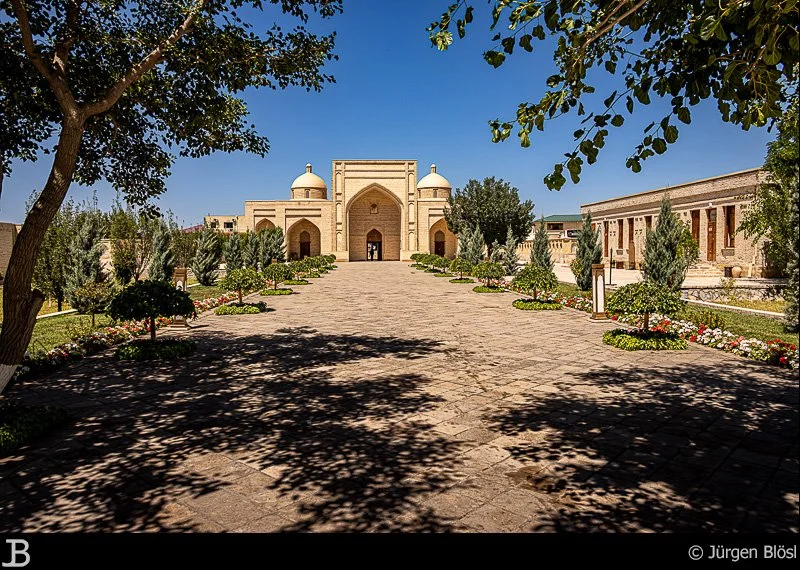
Next, we head to the burial site of Naqshbandi [↗], the founder of the Sufi order. This is a huge complex with several mosques, Koranic schools, and conference rooms. The entire site is a Muslim pilgrimage destination. For the first time, there are more local visitors than tourists. In fact, I saw only a single tour group.
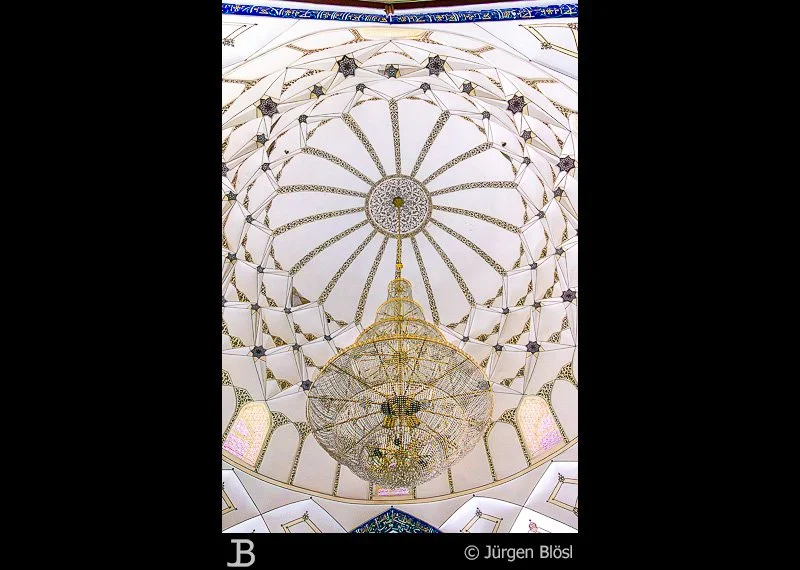
The complex is rather simplistic and not very photogenic. Especially not at 11 a.m. Only the roof surrounding a courtyard is beautifully painted.
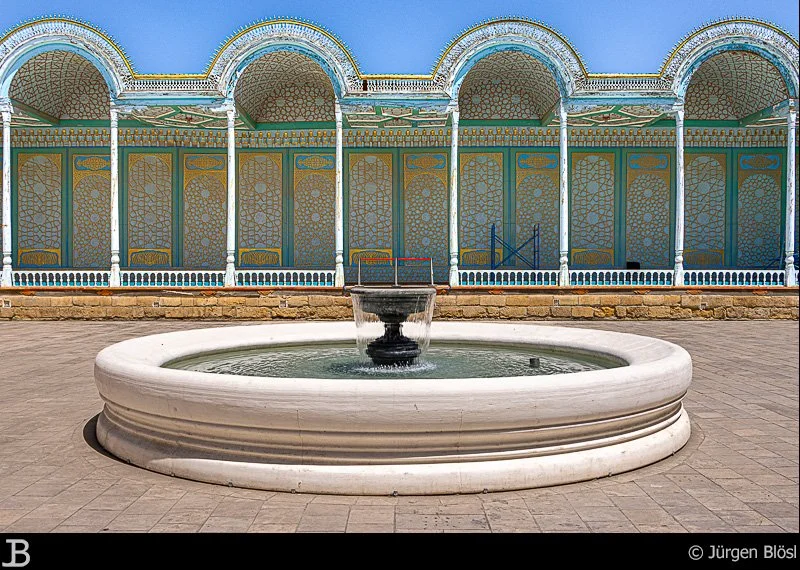
Just a few minutes’ drive away lies the summer residence [↗] of the last ruling emir. Here, the situation is exactly the opposite: crowds of tourists jostling through the small rooms of the main house. To get there, you have to walk through a small “shopping street” with improvised stalls. Fortunately, the vendors in Uzbekistan aren’t pushy at all.
The summer palace is a pleasant contrast to all the mosques and Koranic schools, even if it won’t necessarily be remembered as the highlight of the trip.
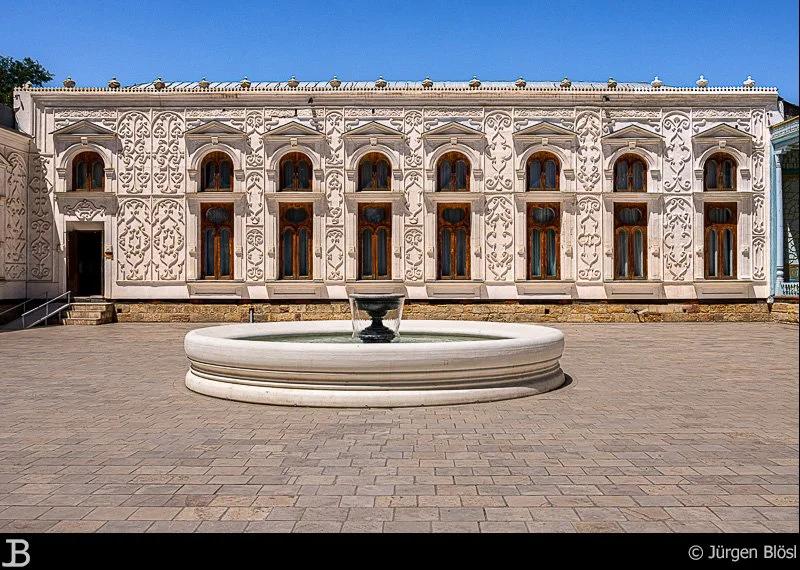
Back in the city center, most of us proceed to look for a blacksmith’s shop. It was actually supposed to be on the itinerary for yesterday, but somehow it fell through the cracks. I hadn’t thought much of it because the tourist blacksmith’s shop, which I’d walked past several times, always had a chair blocking the doorway. Presumably as a sign that there was nothing interesting to see. We head straight to that very blacksmith’s shop, and today, too, the chair is blocking the way. The owner is supposedly on his way to Mecca, and only the apprentice is there. We’re allowed inside, but the forge isn’t in operation today either. Our guide takes us to three or four more shops where there’s a forge in the background, but no one is working anywhere. He would have kept looking, but the group has enough. We call it a day.
Two of us go for a coffee and some delicious cake. That’s enough for me for today. I’ll pass on the stew at a local family’s house tonight.
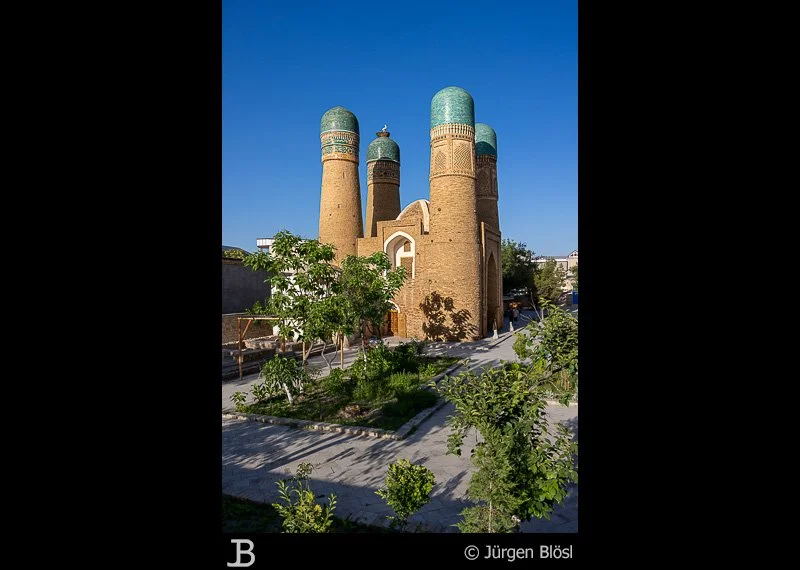
At 6 p.m., I head out again for an hour. Chor-Minor [↗] is the gatehouse of a former Koranic school. The four colorful turrets at the corners are particularly remarkable.
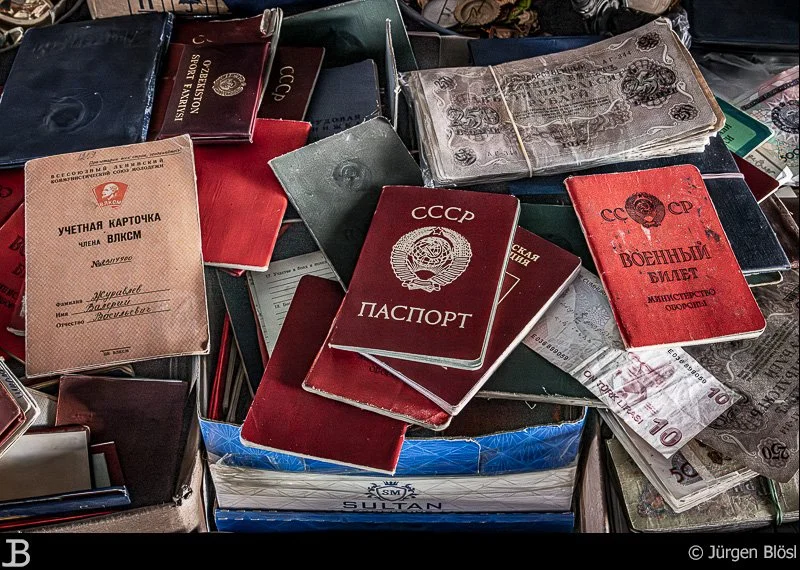
Across the street, I find something like a permanent flea market (although the owner would probably call it an antique shop). The first thing that caught my eye was a pile of old cameras of various ages and origins. But he also has watches, hundreds of pins, porcelain, and uniforms, as well as passports and rugs - most of it of Russian origin. The highlight of the day, at the very least, if not more.