In early May, we were traveling through northern Italy. I’ve already written here about San Marino and the Reggio Emilia AV Mediopadana Railway Station. The rest will follow gradually.
After breakfast, we leave San Marino [↗] and head for Ravenna. We park in a large parking lot on the northern edge of the old town. Despite its size, it’s almost full, and we’re lucky to snag a spot. Most of the license plates are Italian.
In general, the number of tourists is relatively low. In the summer, things are likely to look quite different. However, it seems that Italian schools have declared a “culture week”. Here, as in the cities we’ll be visiting in the coming days, several groups are wandering around and flooding the churches and museums in particular. It goes without saying that this isn’t happening in silence; even the church staff’s not-so-discreet reminders "Silenzio" don’t help much.
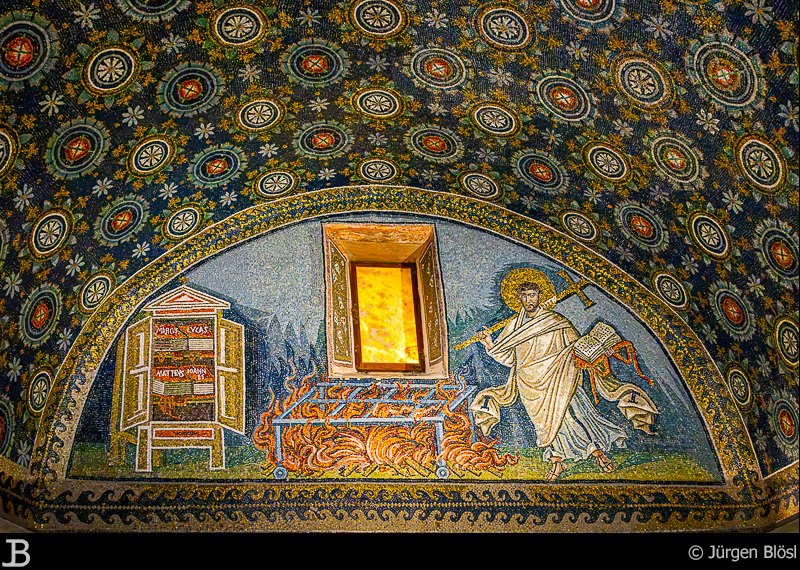
You have to pay a fee [↗] to see the main attractions. For the Basilica of Sant’Apollinare Nuovo [↗] and the Basilica of San Vitale [↗], the admission fee is 10.50 Euros. For just 2 Euros more, you can also visit the Mausoleum of Galla Placidia [↗] and the Neonian Baptistery [↗]. This is definitely worth it. However, there are fixed admission times for these sites, so you lose a bit of flexibility. Visits are also limited to 5 minutes each. But since the mausoleums are quite small, that’s usually enough.
There’s also the option to include the Archiepiscopal Museum, but we’ll skip that.
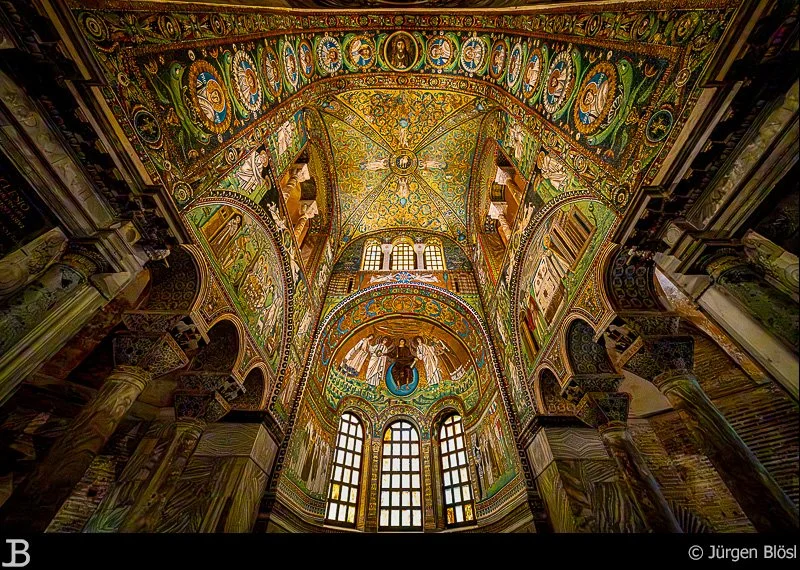
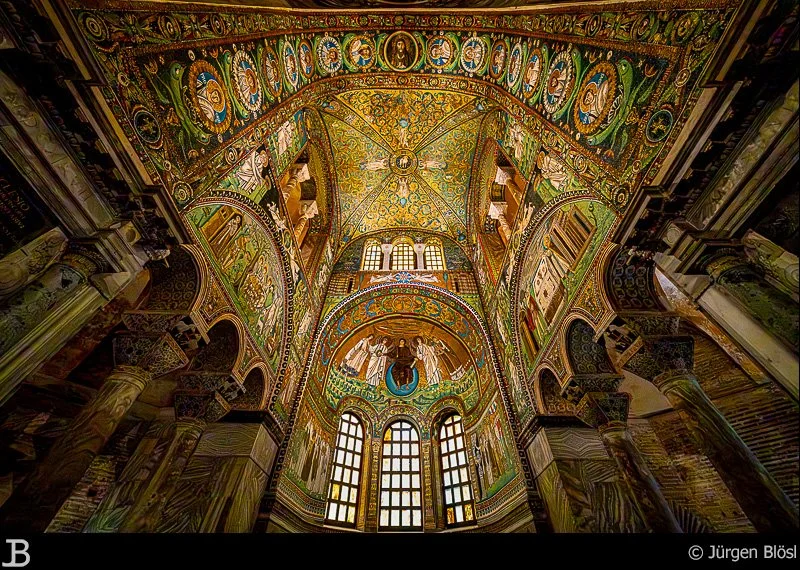
We’ll start with the rather dim Mausoleo di Galla Placidia and then head to the neighboring Basilica di San Vitale. This is Ravenna’s main attraction - and rightly so. The church isn’t huge, but the mosaics are fantastic. From a distance, it’s hard to really appreciate just how detailed the images are. Only when you zoom in does their full splendor become apparent.
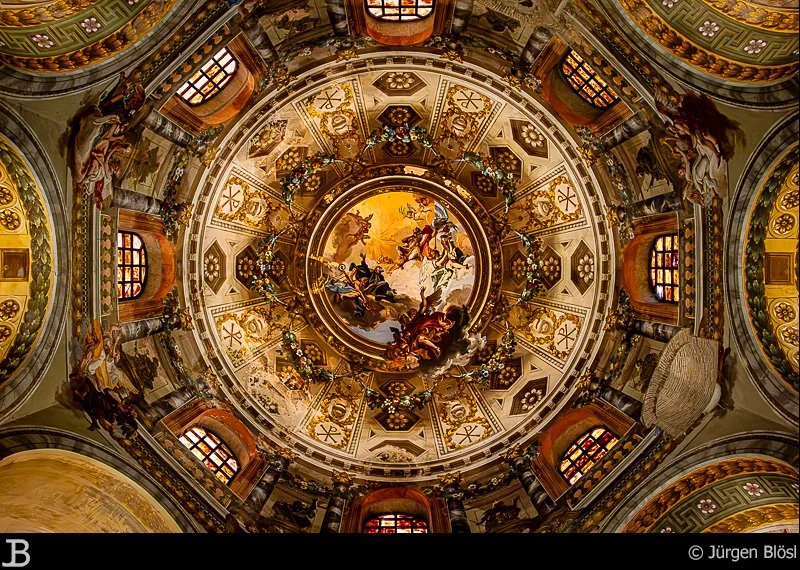
We walk through the streets to the Arian Baptistery, but it’s just closing. So we head to Sant’Apollinare Nuovo, the other large church for which we paid admission. Here, too, schoolchildren are running around, and their shouts naturally echo even more beautifully in the large, largely empty church. The staff’s voices almost break as they try to restore some quiet to the house of worship - in vain.
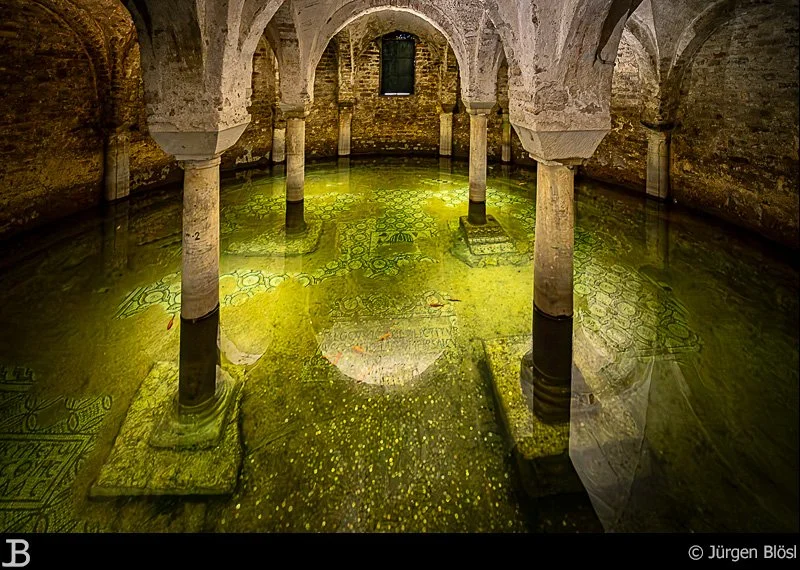
The Basilica of San Francesco [↗] is something special. Its crypt lies underwater. You can’t enter it, but you can look inside through a small window. By the way, you’ll need a little change for the lighting.
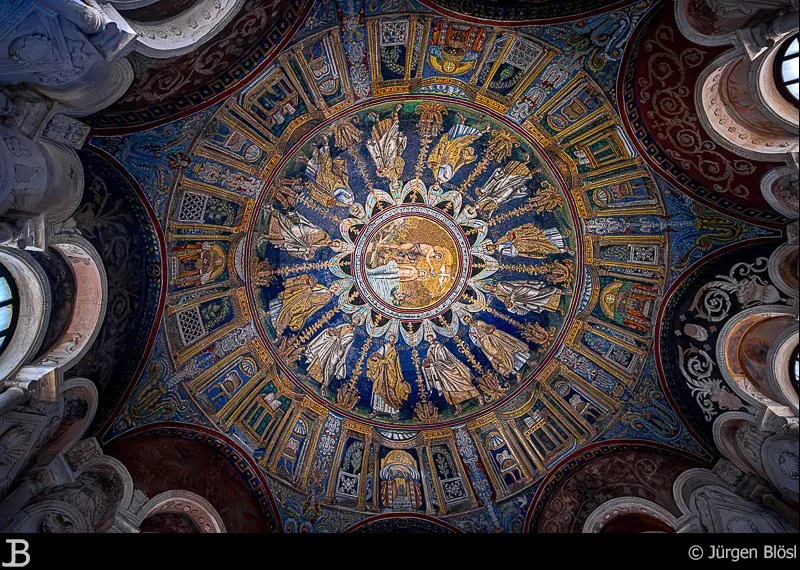
The cathedral’s baptistery, also known as Baptistery of Neon, is located next to the current cathedral and thus a short distance away. But even though we didn’t quite make it in time for our scheduled time slot, we were still allowed in after waiting a few minutes. This time without a large group. That’s far more pleasant. The mosaics here are fantastic, too. And since it’s brighter than in the first mausoleum, you can see them much better.
The cathedral [↗] next door is worth a visit, even if it doesn't quite keep up with the other highlights. The large nativity scene, which appears to be on display year-round, is noteworthy. It’s a bit kitschy, but you should still take a little time to reflect on the stories that are portrayed.